

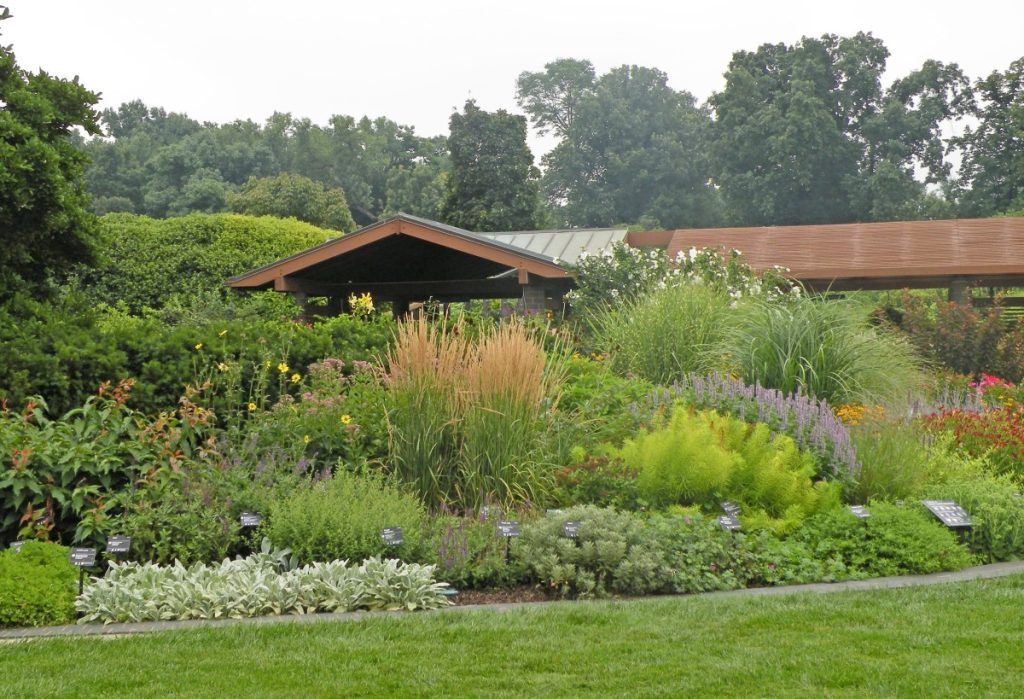
I love spending time in my garden but as I age, I find that too much bending over hurts my back and too much kneeling hurts my knees. Therefore, I’ve been looking for ways to lessen maintenance. One is choosing perennials that don’t need frequent deadheading. Another is selecting dwarf shrubs with lots of foliage color or long bloom that fit well into a perennial garden.
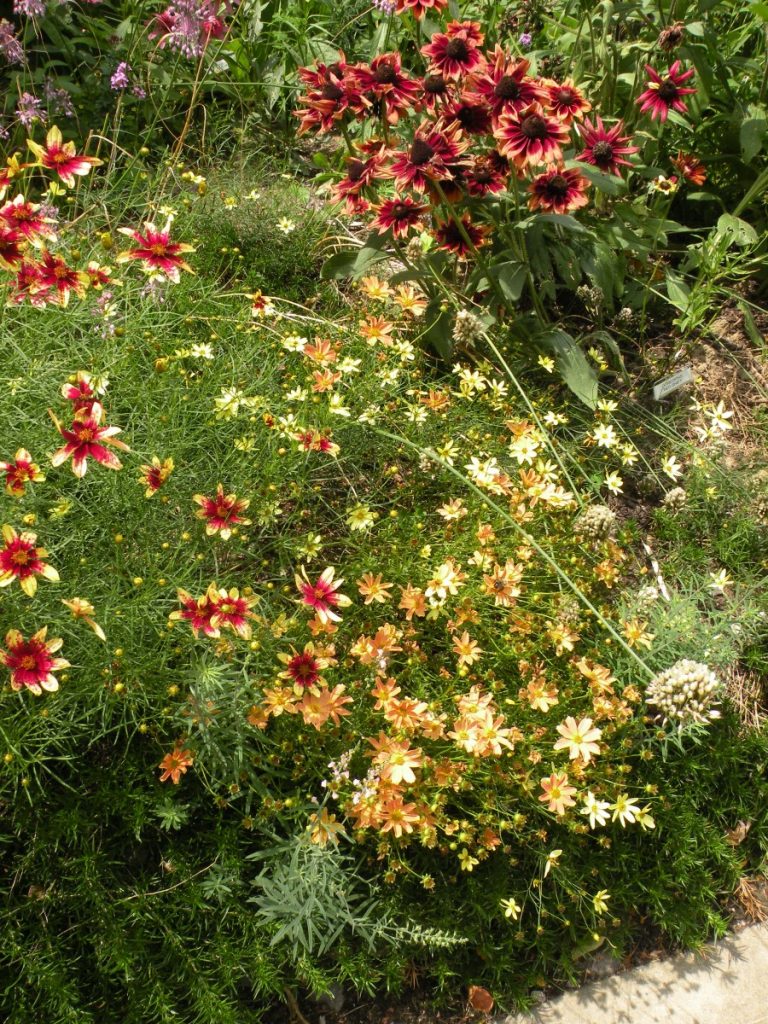
Let’s start with sun-loving perennials that either self-clean or need infrequent deadheading. My number one choice is Coreopsis verticillata (Threadleaf Tickseed). It first blooms in June. When the deadheads appear, I shear it back by a third and within three weeks, it usually reblooms. Once that rebloom is done, I shear back again and get a third wave of bloom. Another virtue of this perennial is that there are several cultivars ranging in color from pale yellow to apricot to pink to red. Height is generally twelve to eighteen inches high and eventually two feet wide.
Echinacea, Nepeta ‘Souvenir d’Andre Chaudron’, Pennisetum in my east facing bed
several years ago.
The first one I ever grew was ‘Moonlight’. I love the pale yellow color because it blends so well with everything else but I also love the other colors. ‘Red Satin’ really kicks up intensity while the apricots and pinks act as blenders.
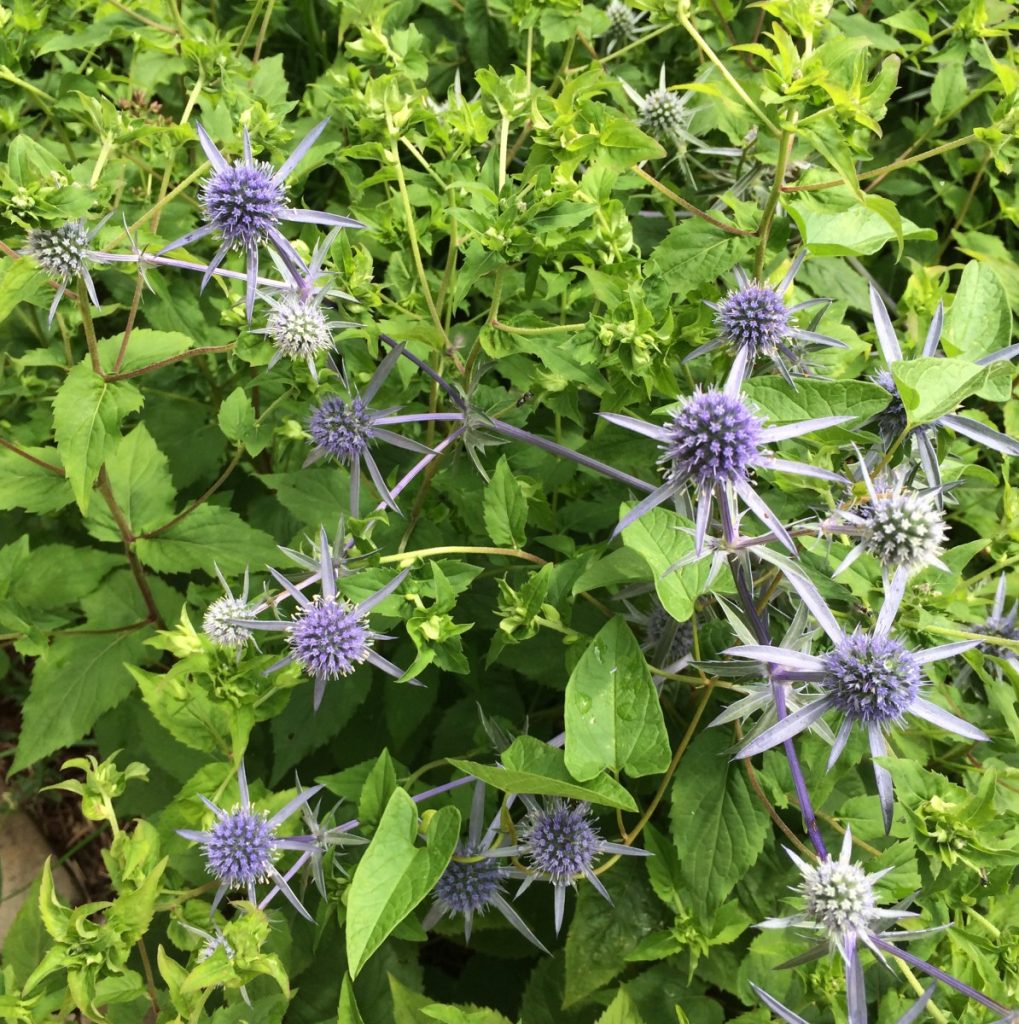
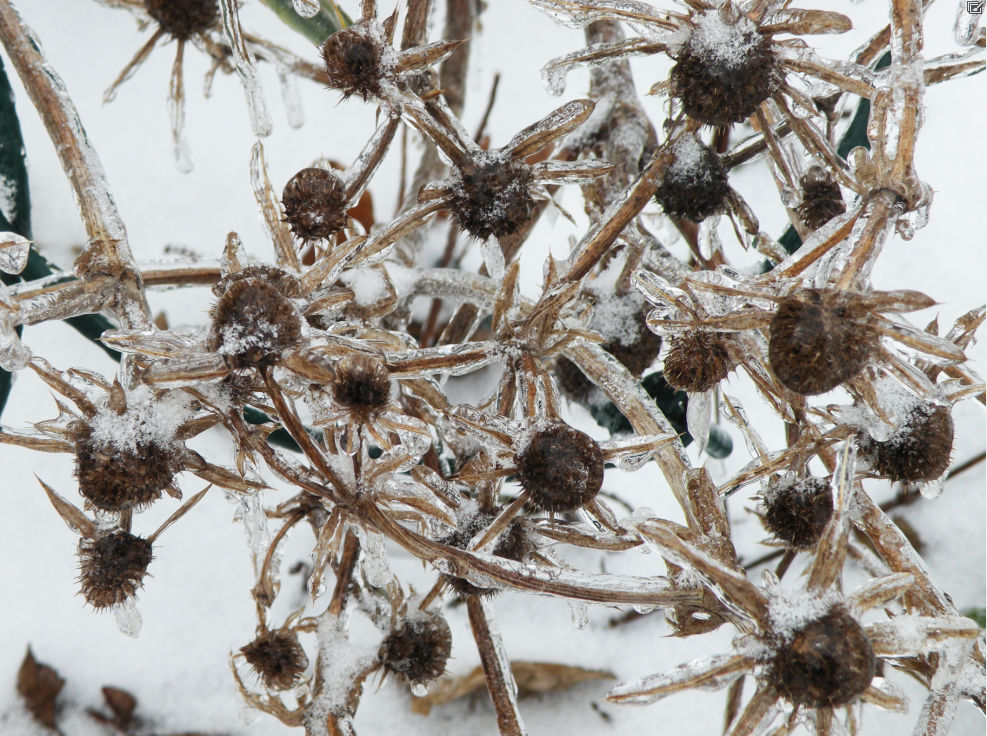
I have grown several different Eryngium (False Sea Holly) and loved them all for their their color and their low maintenance. The most commonly know is Eryngium x zabellii ‘Big Blue’. The unusual, spiky, thistle-like violet-blue flowers grow three feet high but only two feet in diameter. Although I love the flowers, I needed a shorter version for my garden so planted Eryngium planum ‘Blaukappe’ (‘Blue Cap’) instead; it only grows two feet high. These perennials bloom in June and July but the deadheads remain well into the fall. The stiff and spiny leaves that lie below are also blue, as are the stems. The seed heads of Eryngium are an attractive food source for songbirds and the deadheads are quite interesting during the winter, particularly if encased in ice or dusted with snow. Just supply full sun and good drainage. As one might guess, the deer do not find Eryngium very appetizing.
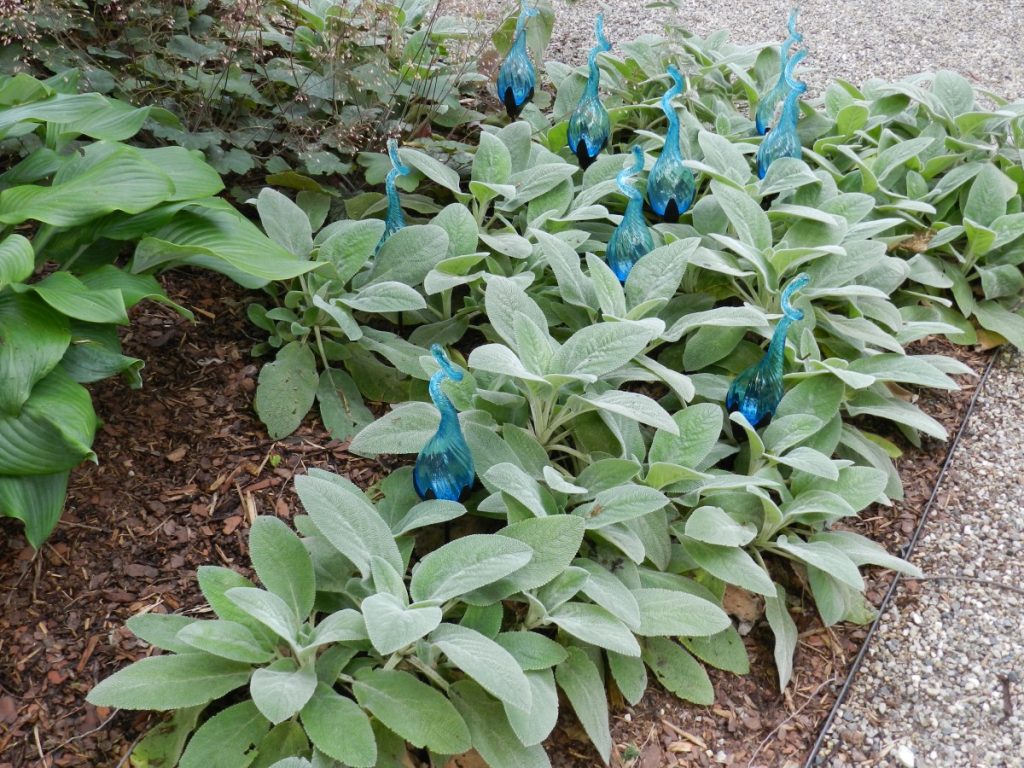
A silver, fuzzy-leafed, creeping groundcover, Stachys byzantina (Lamb’s Ears) is a stalwart for sunny, dry locations. Although the species has purple flowers that are held on twelve to fifteen inch fuzzy stalks, not everyone finds them particularly attractive. Fortunately, there are two relatively flowerless cultivars, ‘Silver Carpet’, the foliage of which looks just like the species and ‘Big Ears’, also known as ‘Countess Helene von Stein’, that is similar but has much larger foliage. I would call the foliage semi-evergreen. It does look somewhat ratty at winter’s end but those leaves are quickly covered by the new ones.
Stachys byzantina needs to be grown in a very well-drained site, preferably on a slope, because its worst enemy is moisture that causes the plant to rot. If it melts out, it should be cut back to encourage new growth. Children love to pet it and the color is lovely and cooling. It is hardy in zones 4-7 and is a native of the Caucasus. I find that it works well as a foil for green perennials that also love dry sites.
Margie’ in late July.
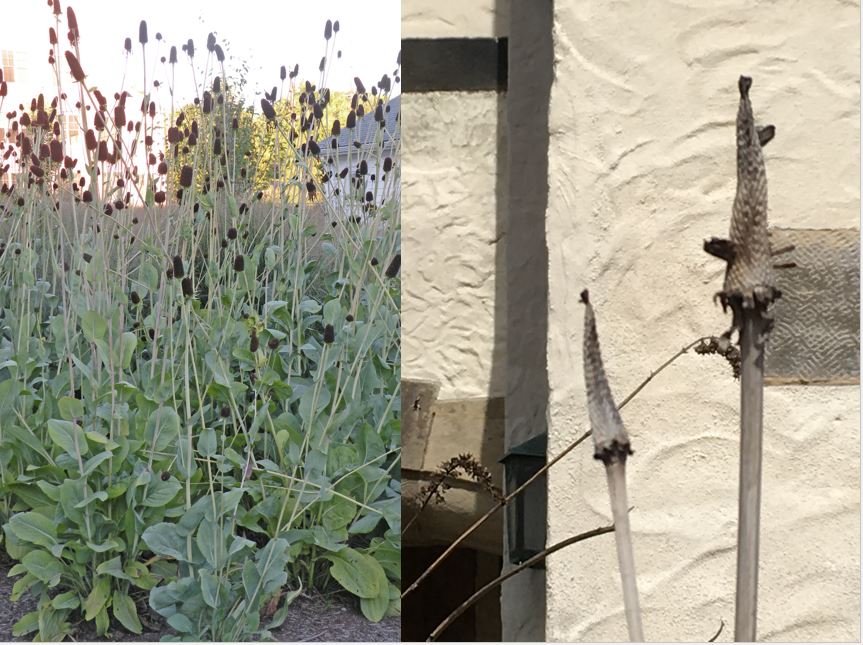
eaten most of the seeds.
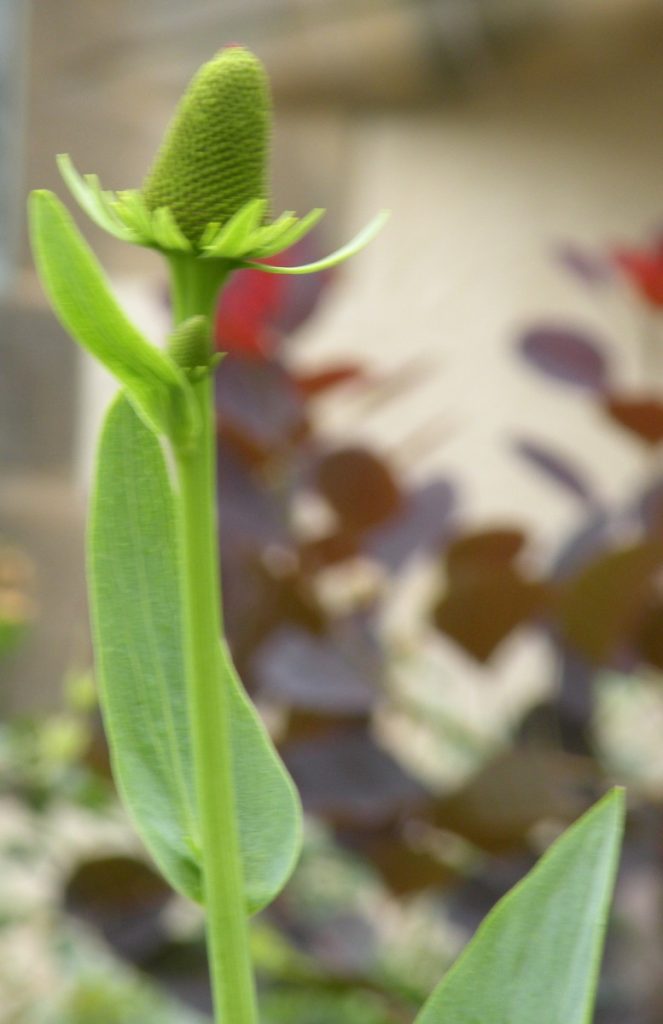
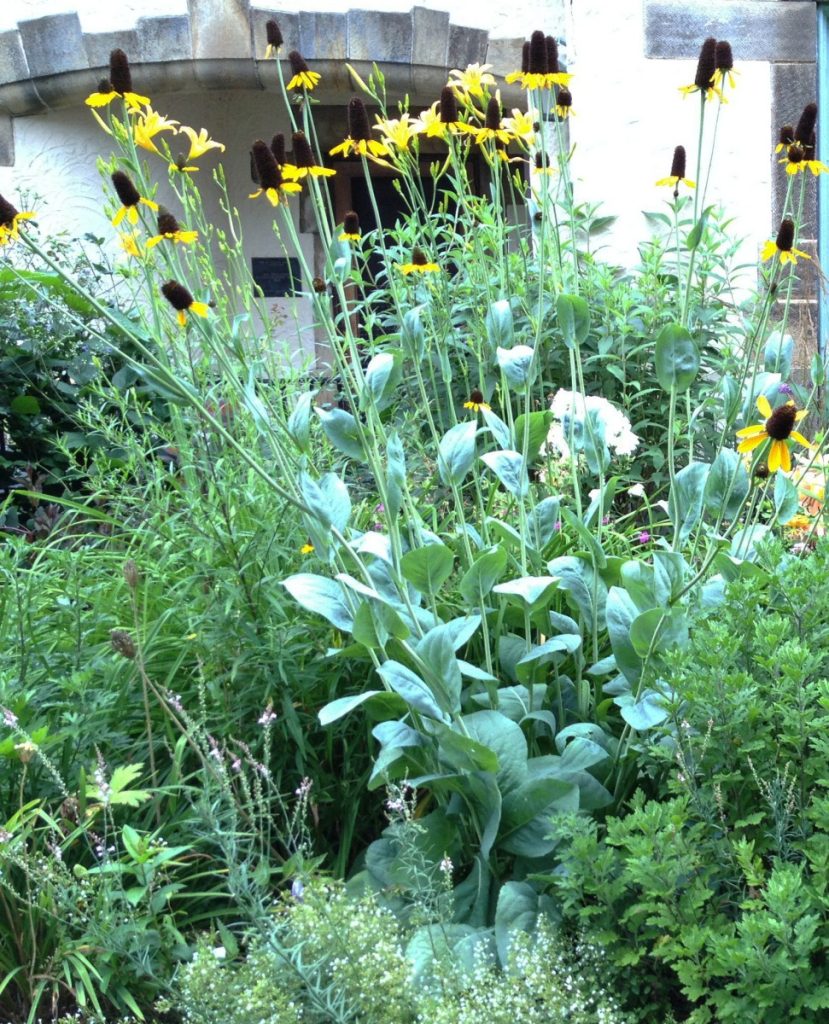
Rudbeckia maxima (Giant Coneflower) is an architectural jewel. In late June, from a grouping of large blue-green foliage, four foot tall stems emerge with a bud. By early to mid-July, those buds become a burst of golden yellow petals that surround a narrow brown cone. Once the petals fall off, the cone deadheads offer a striking sight as well as food for birds. The strong stems usually remain up all winter so the only maintenance is cutting them down to the base in Spring.
Mine are planted near the front of a border because the foliage is low and I treat this perennial as a see-through. Behind them are a mass of Hemerocallis ‘Autumn Minaret’ (a bit of a misnomer since it blooms in July) that bloom at approximately the same time and are very close in color.
Hopefully, I’ve given you some ideas for high performance, low maintenance perennials.

0 Comments