

Here we are in early November and I am thoroughly enjoying the perennials and shrubs that are still blooming or have excellent fall color.
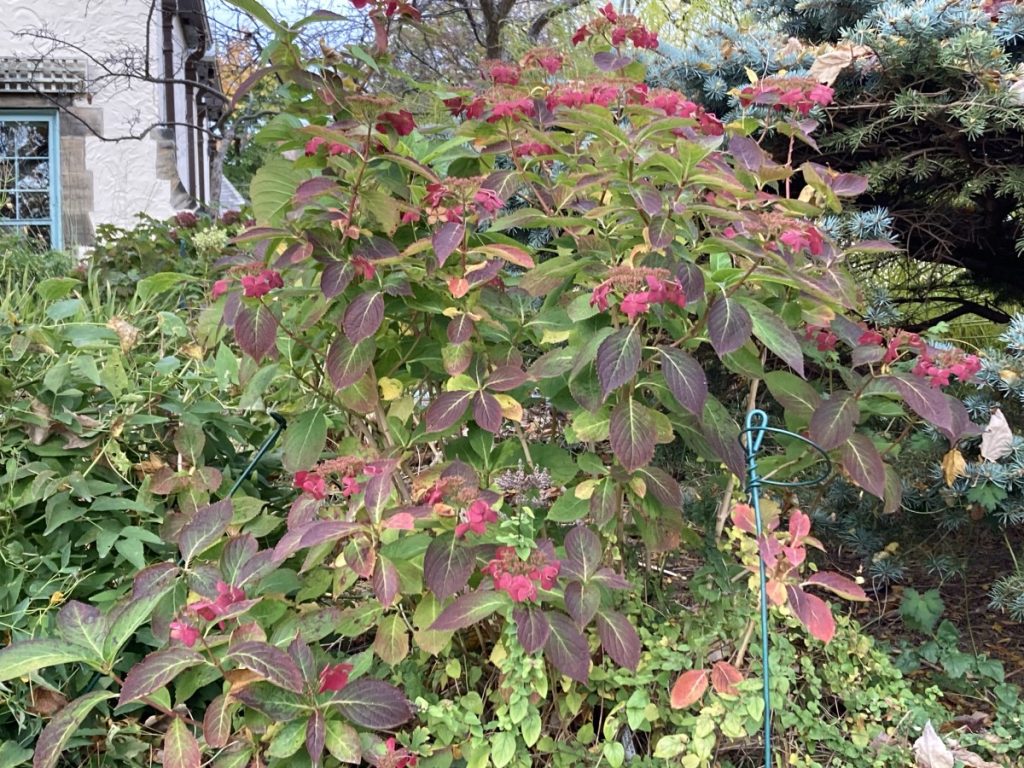
Most noteworthy are several of my hydrangeas. At one time, Klyn Nursery featured several Japanese cultivars of Hydrangea macrophylla. Unusually for earlier macrophylla, ‘Jogasaki’ had lacecap blooms instead of mopheads. Like most macrophylla, the color of the bloom depends on the aciditiy of the soil. This year, I did not add aluminum sulfate so the earlier blooms were pink. Now, in late fall, its blooms have turned rose red and many of its leaves are maroon.
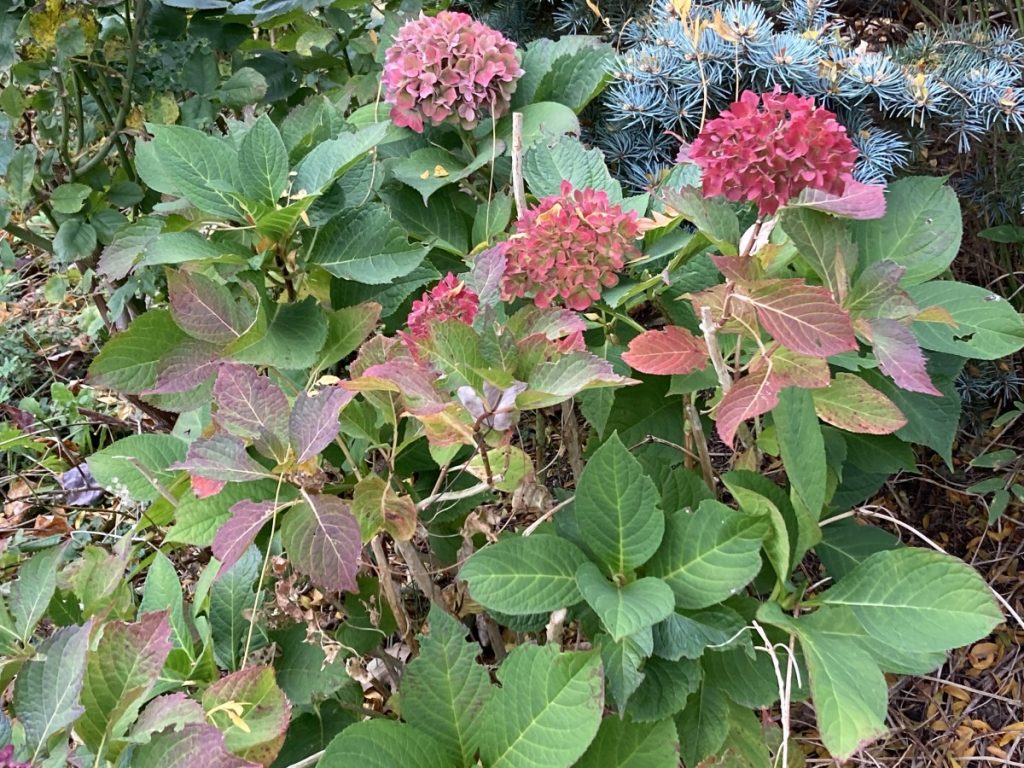
In the same bed, but further east, is Hydrangea macrophylla Let’s Dance ‘Rhapsody Blue’, one of the cultivars in the Let’s Dance series. The members of this series have proven themselves to be strong growers and bloomers. Just like ‘Jogasaki’, the blooms were pink instead of blue during the summer. Both of these hydrangeas are in a south facing bed.
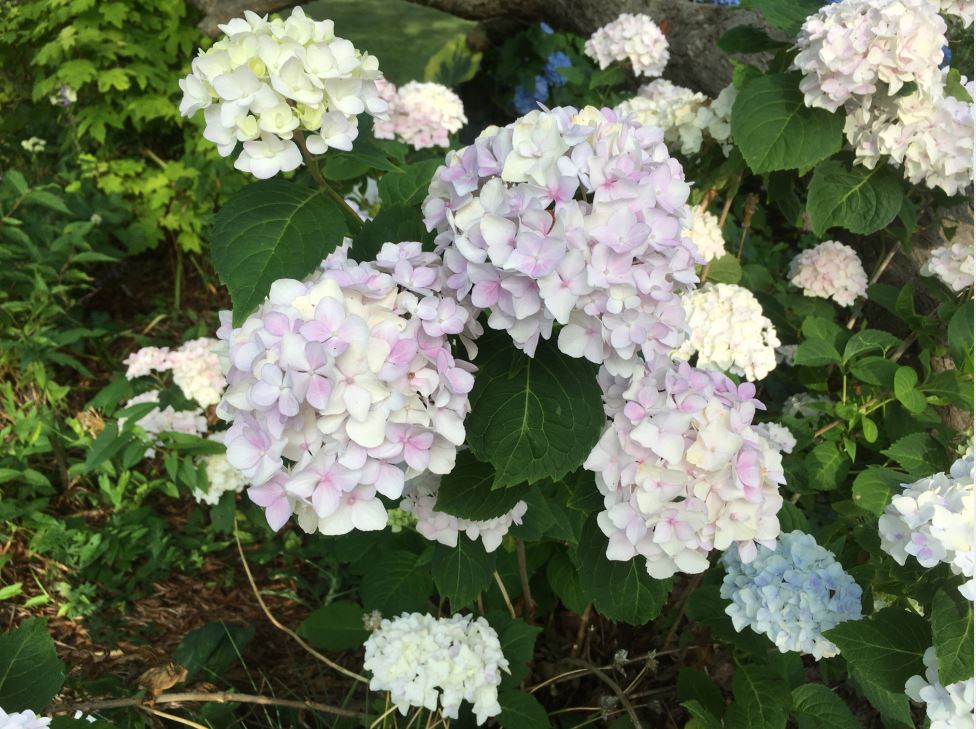
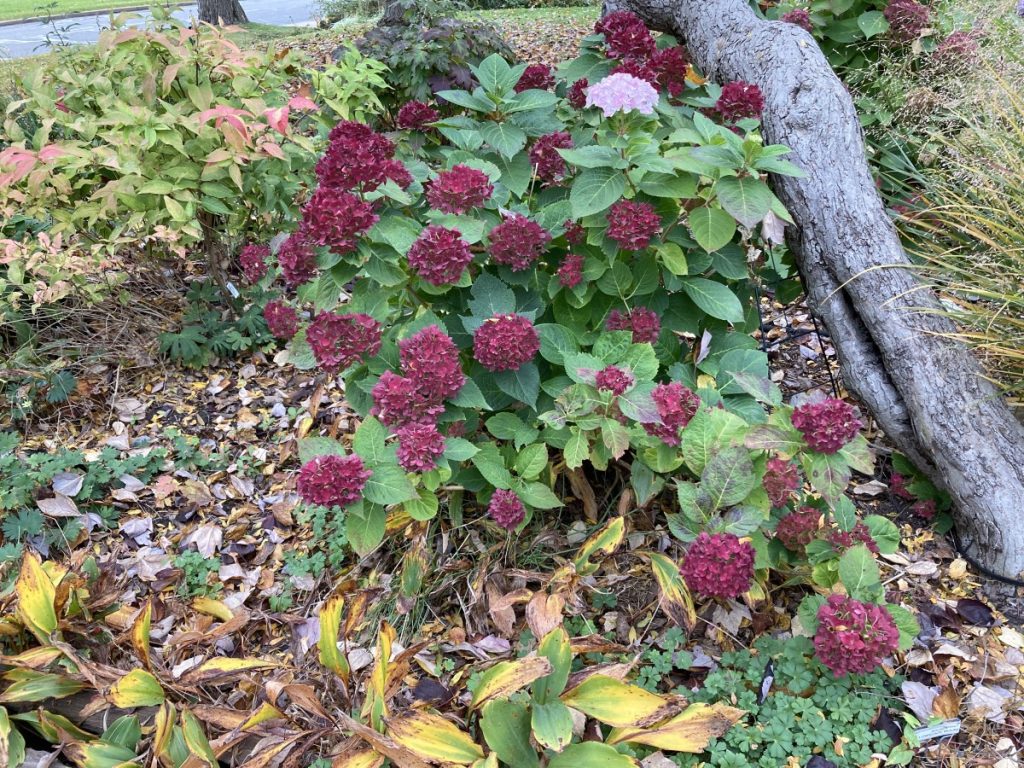
Hydrangea macrophylla ‘Blushing Bride’ is in an east facing bed that is partially shaded by an ancient crabapple but that position has not inhibited its bloom at all. In early summer, the blooms are white; by mid-July, they are tinged with blue. Then, in October and November, they are deep rose, almost maroon.
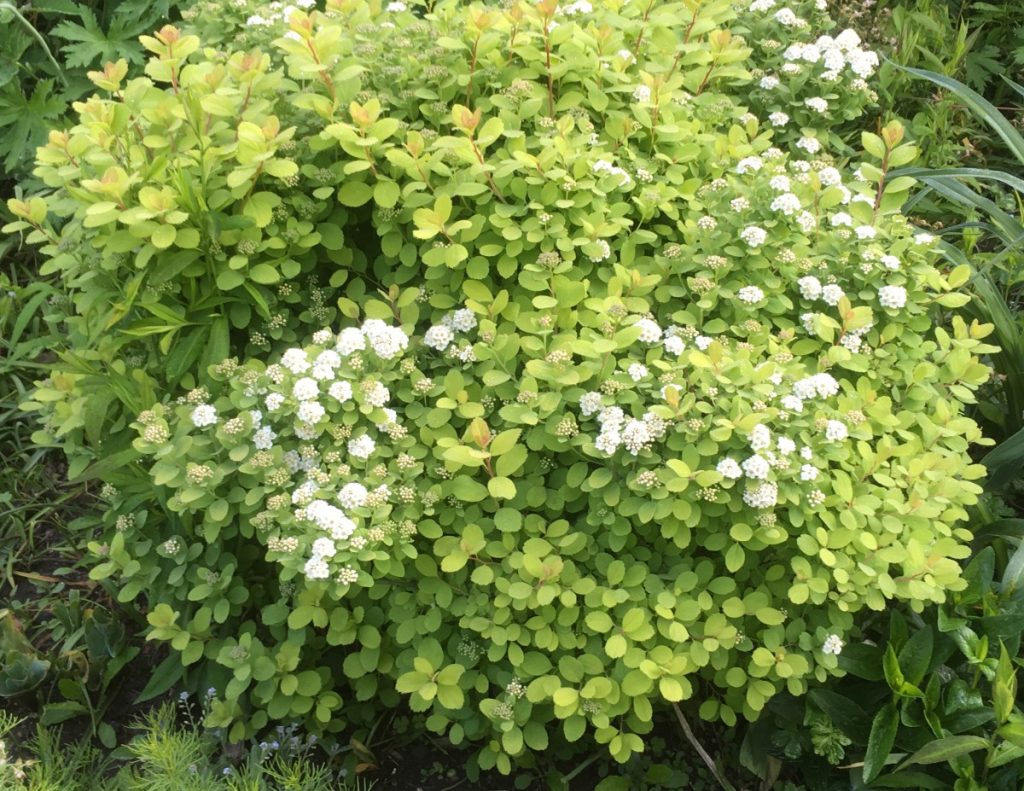
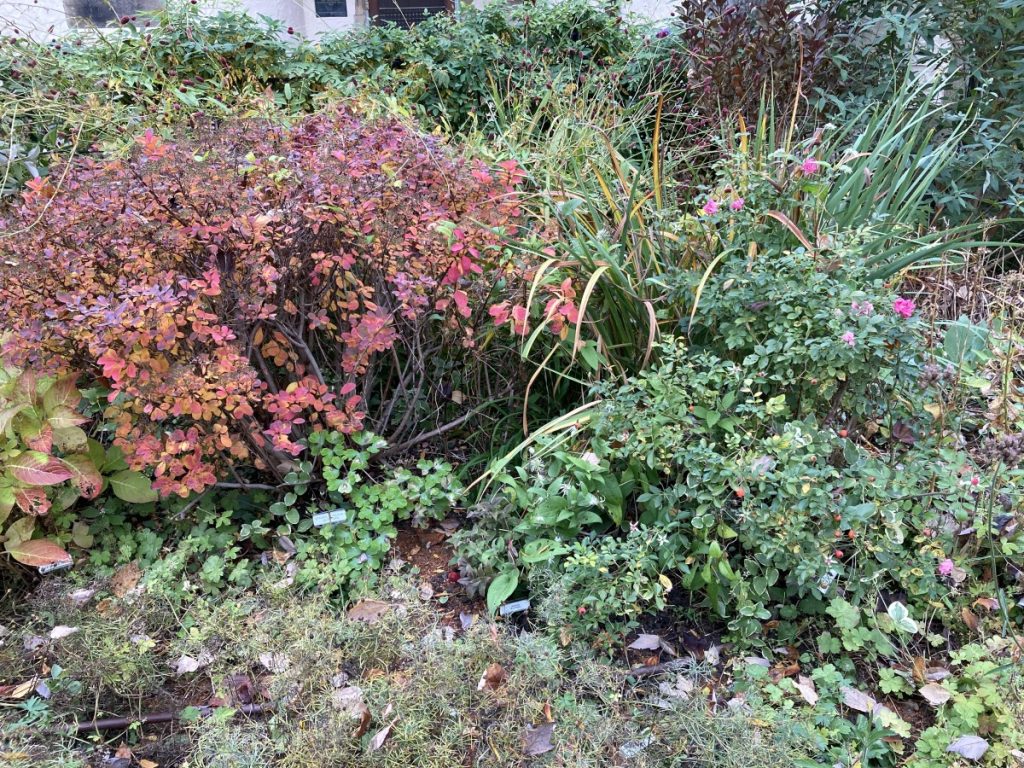
Many spireas have excellent fall color but the one that has impressed me the most is Spiraea betulifolia ‘Glow Girl’. During the growing season, she has white spring flowers and chartreuse foliage but when temperatures drop, her foliage truly glows.
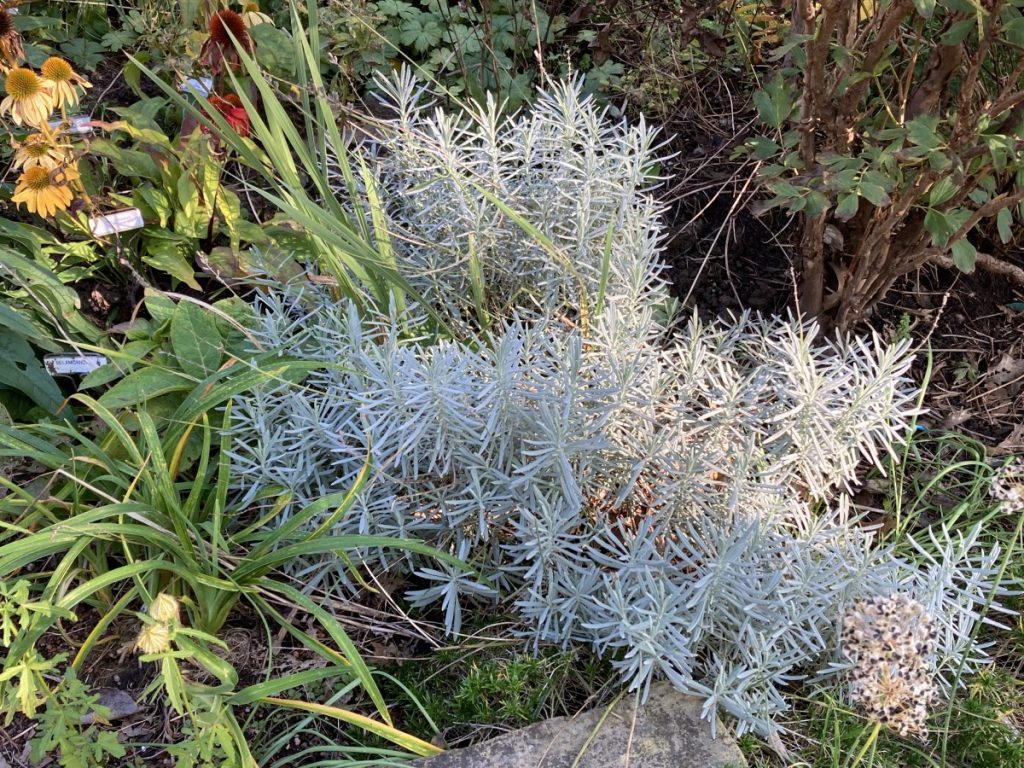
The foliage of lavenders adds color to the landscape even when not in bloom as long as you have well-draining soil. I have several but have become addicted to ‘Phenomenal’ which has larger and taller foliage than the standard English lavenders. I’ve also noticed that it seems a bit more silvery and it definitely stands out in a mostly dormant landscape.
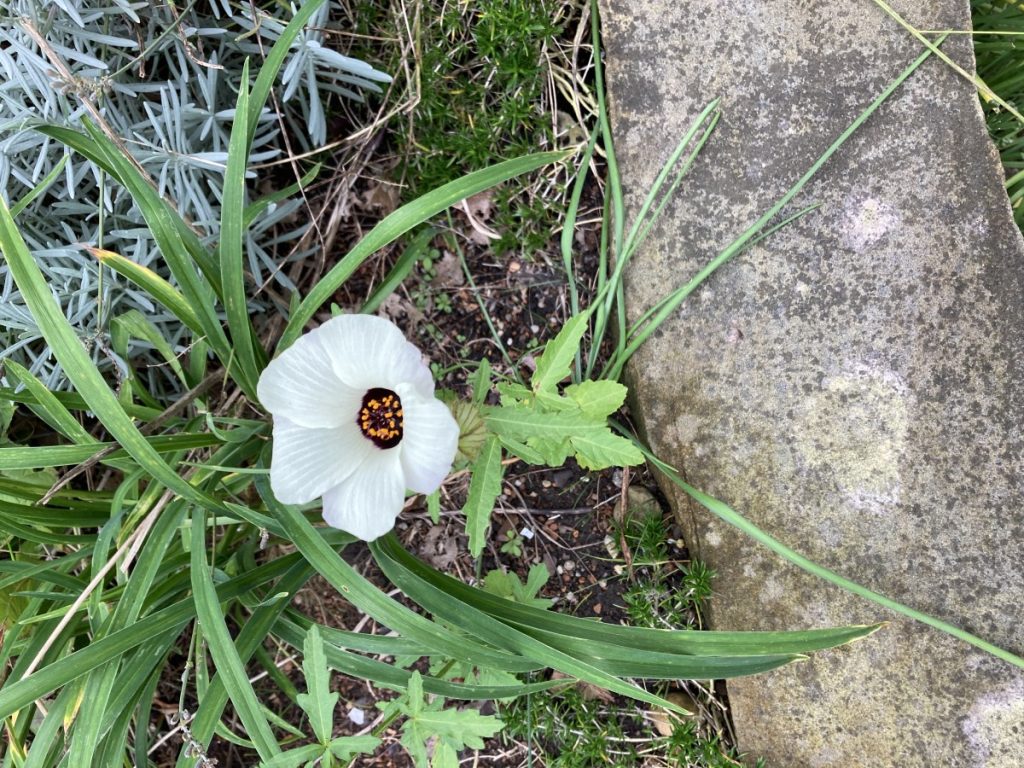
Just as an aside, I love surprises in the garden. Several years ago, I planted a reseeding annual named Hibiscus trionum (Flower-of-an-Hour) but I haven’t seen it quite a few years. This year, in early October, I was amazed to see it blooming in one of my front beds. Now I just hope that it will reseed so that I can enjoy it again next year. The white flower is lovely and so are the seedpods.
I hope all of you have plants that you are still enjoying.

0 Comments