

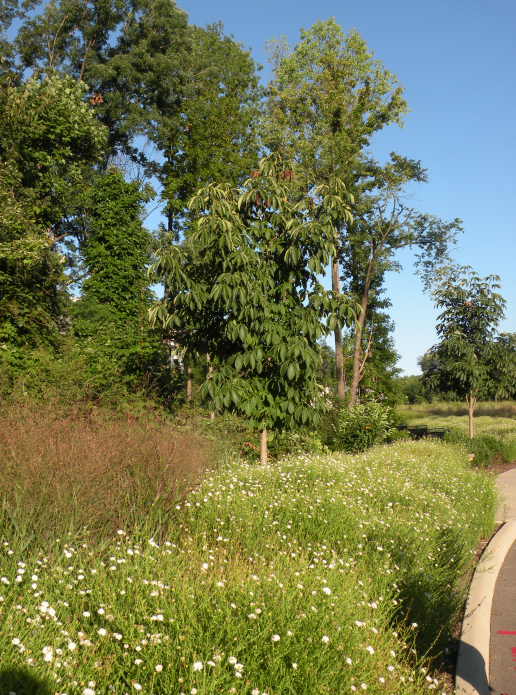
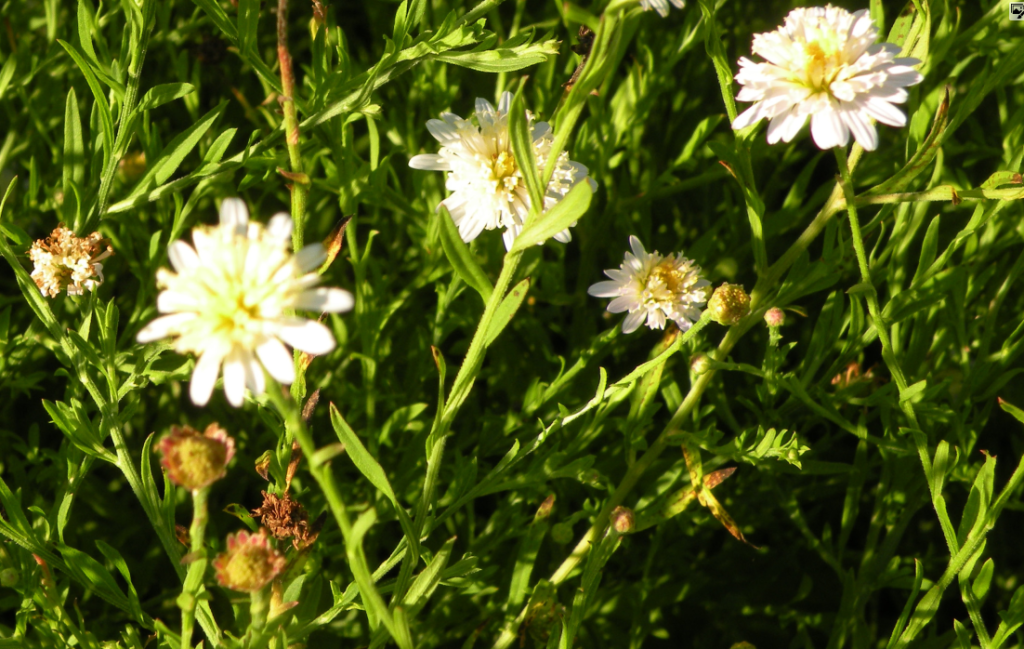
Most sun-loving asters do not bloom until the fall but Kalimeris is a summer bloomer. Also known in the past as Asteromoea, I first became acquainted with this genus in 2011 when touring the grounds of Franklin Circle, a retirement community in Chagrin Falls, Ohio. The grounds were designed by the then famous design company Oehme Van Sweden out of Washington, D.C. One of their trademarks was planting in large drifts to make maintenance easier. One of the chosen perennials was Kalimeris pinnatifida that is now also known as Aster iinumae. This plant grows approximately two feet high and wide, even under drought conditions, for most of the summer. The double white flowers are small but multitudinous.
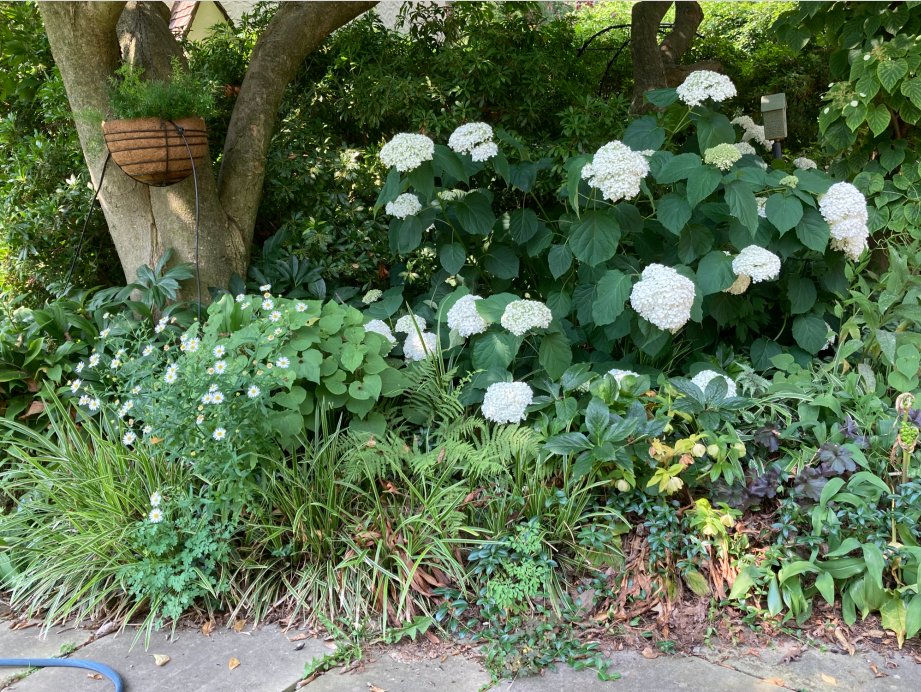
More useful in the perennial garden or mixed border is Kalimeris incisa, particularly the cultivars ‘Alba’ and ‘Blue Star’. I first saw ‘Alba’ in a Baltimore garden in 2015 but waited until 2021 to plant ‘Alba’ in my back garden under the shade of an old Magnolia so it only gets morning sun. It grows about two feet high but would probably be shorter in full sun. The white, daisy-like flowers have a yellow center.
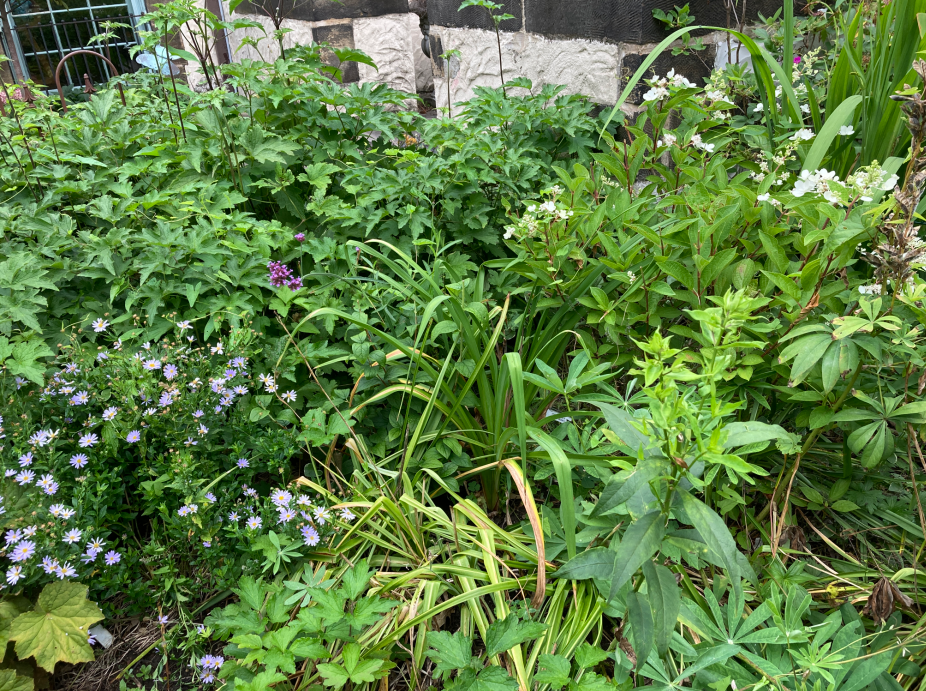
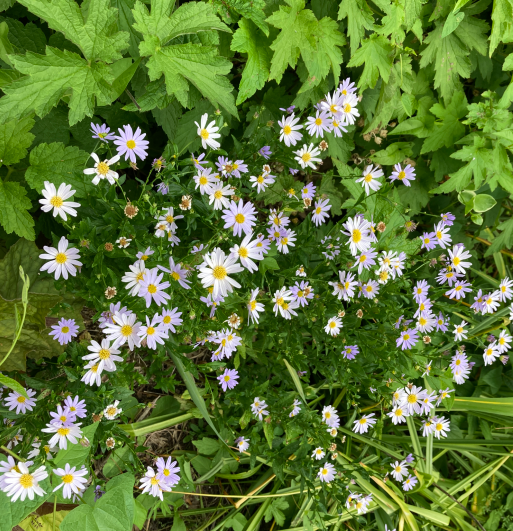
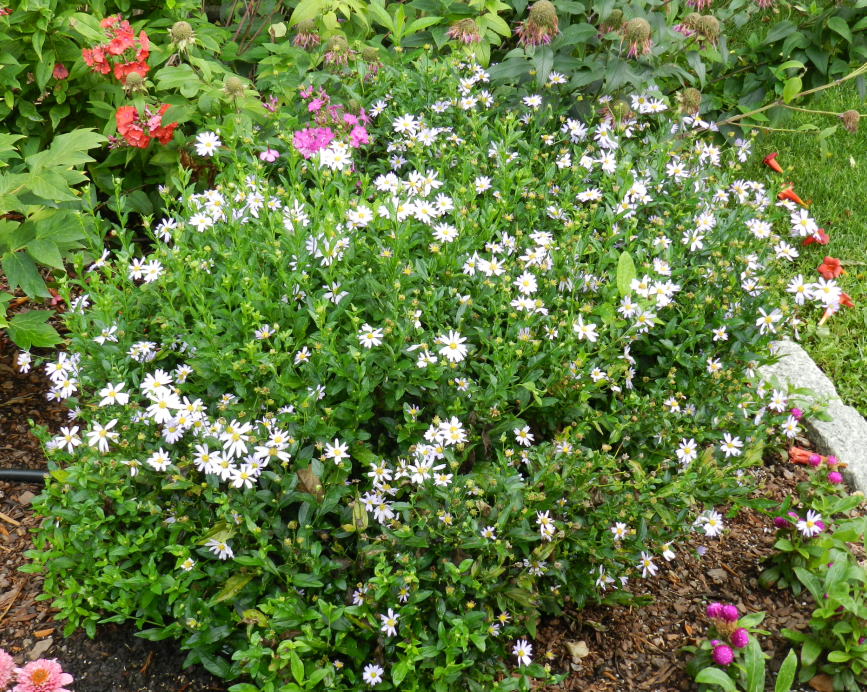
Kalimeris incisa ‘Blue Star’ has been an undemanding star in my front garden. I first became acquainted with this genus on garden tours in other cities but no one locally was growing it until 2020 when I was finally able to acquire it. It blooms from mid-June until frost and is only one foot high and now about a foot and a half wide.
All Kalimeris are drought tolerant and no animals seem to have acquired a taste for them. Of the various species and cultivars, Kalimeris incisa ‘Blue Star’ is the easiest to find. I’m sure you find a space for this little known genus.

0 Comments