

As discussed last time, many clients ask for natives in order to help the environment even though natives may not be the best answer for a particular situation. However, there are many natives available with which many designers and gardeners are not familiar. I am continuing to make it my mission to acquaint you with some of these. This time, I will discuss perennials for shade.
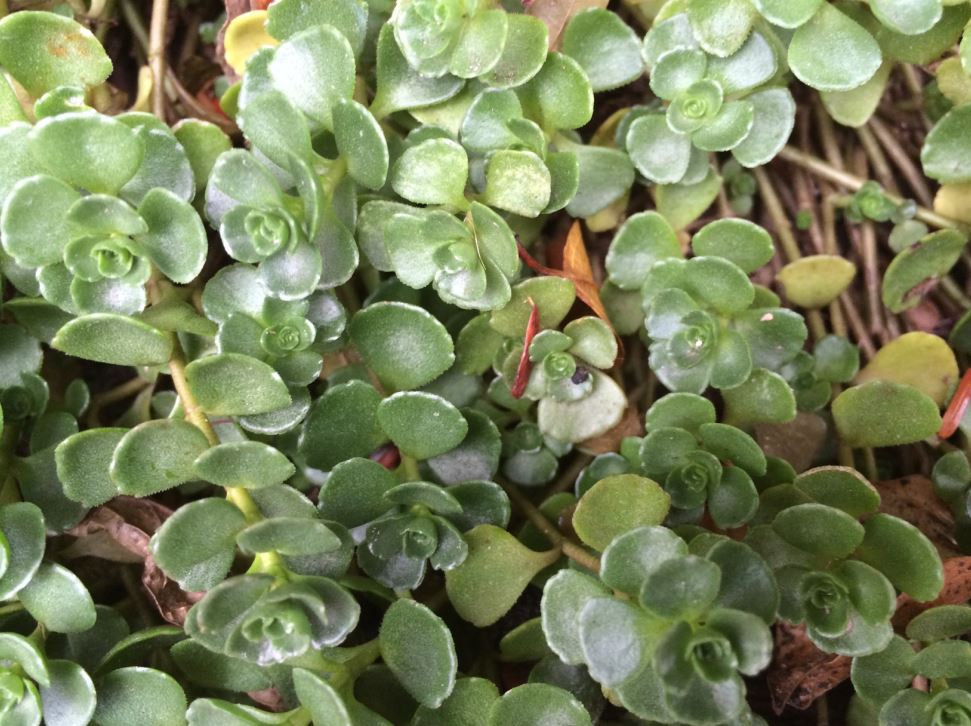
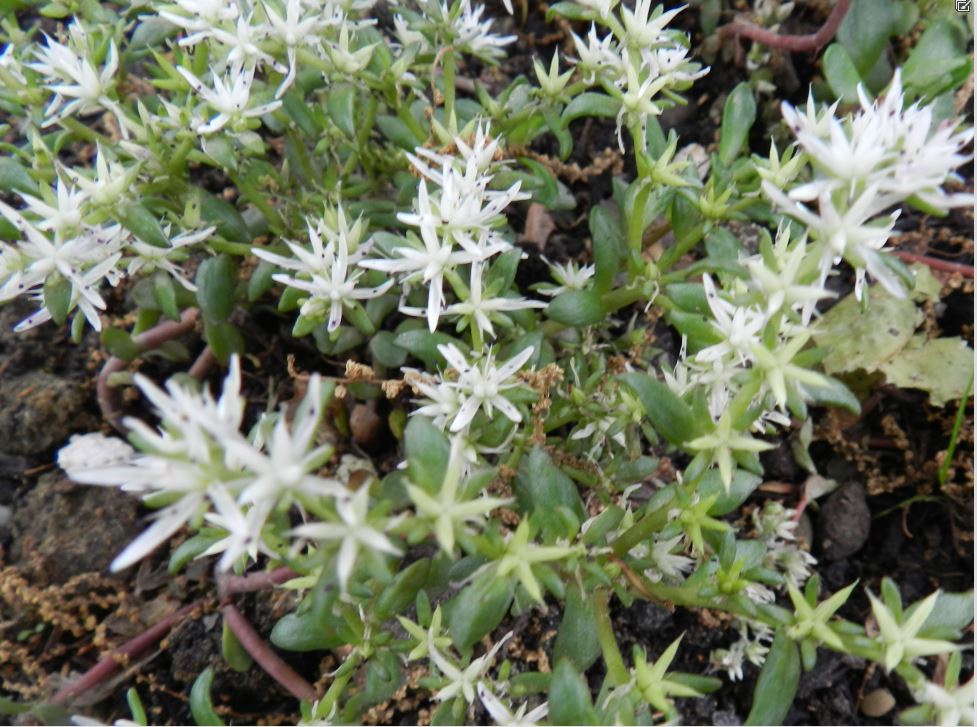
One of my favorites belongs to a genus known as sun loving but Sedum ternatum is a species that is a shade lover. Only a few inches high, it is an excellent evergreen groundcover with lovely white flowers in May and competes well with tree roots. As with other groundcover sedums, this one seems to be completely ignored by deer.
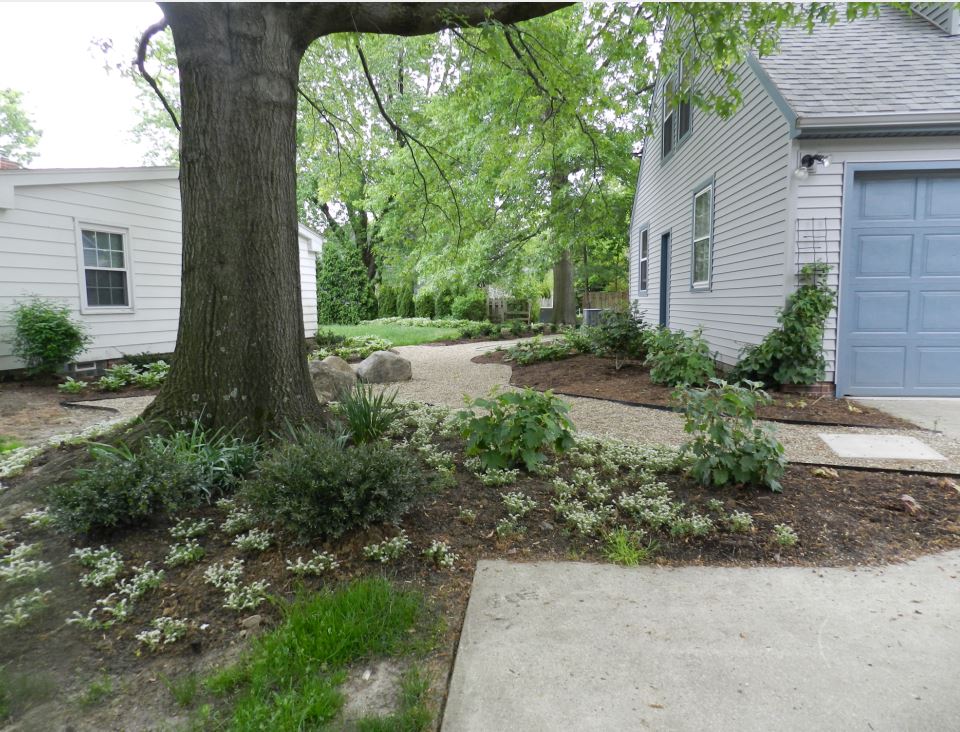
The cultivar named ‘Larinem Park’ is supposed to be more compact than the species and significantly more tolerant of shade and moisture, making it a better choice for planting in areas with less sunlight and slightly wetter soil conditions compared to the typical Sedum ternatum that prefers drier, well-drained soil and more sun exposure. I’ve grown it for years at the base of ancient Burning Bushes (inherited) and watered only by Mother Nature.
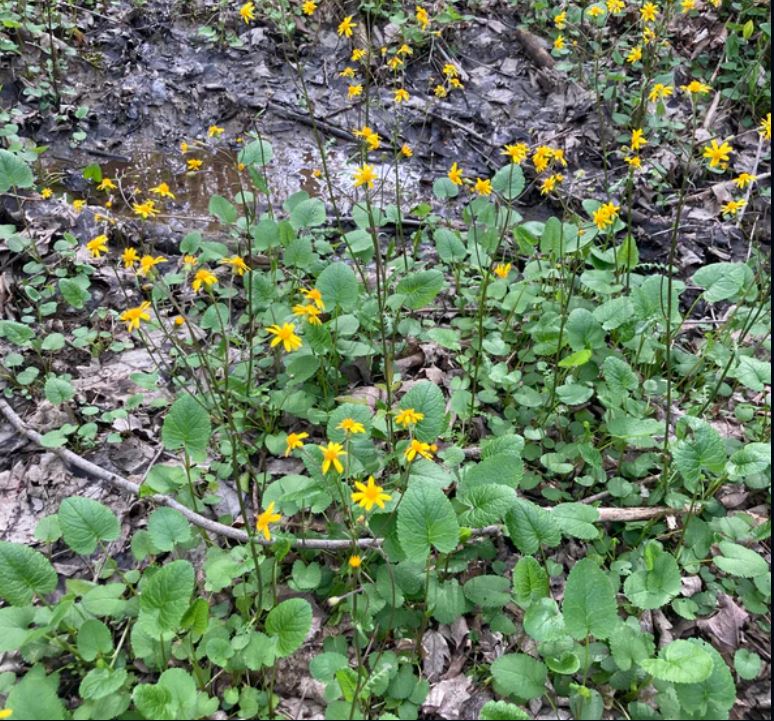
A native perennial with which I have not been acquainted until recently is Packera aurea (Golden Ragwort). This past summer, I visited the Meadow city Native Plant Nursery in the Collinwood area of Cleveland. They grow a vast array of native plants.
Semi-evergreen, heart-shaped basal foliage forms rosettes and the stem leaves are delicate and finely divided. From them, arise purple flower buds (one to two feet tall) that open to starry yellow flowers in April. This plant will self-seed and spread by rhizome so you could end up with a carpet. (All the better to defeat the incipient weeds). Although Packera is quite happy in shade, it will also grow in full sun with enough moisture. It is an excellent springtime source of pollen and nectar for a variety of small bees and flies that are emerging from hibernation at approximately the same time. It is also another deer-resistant plant.
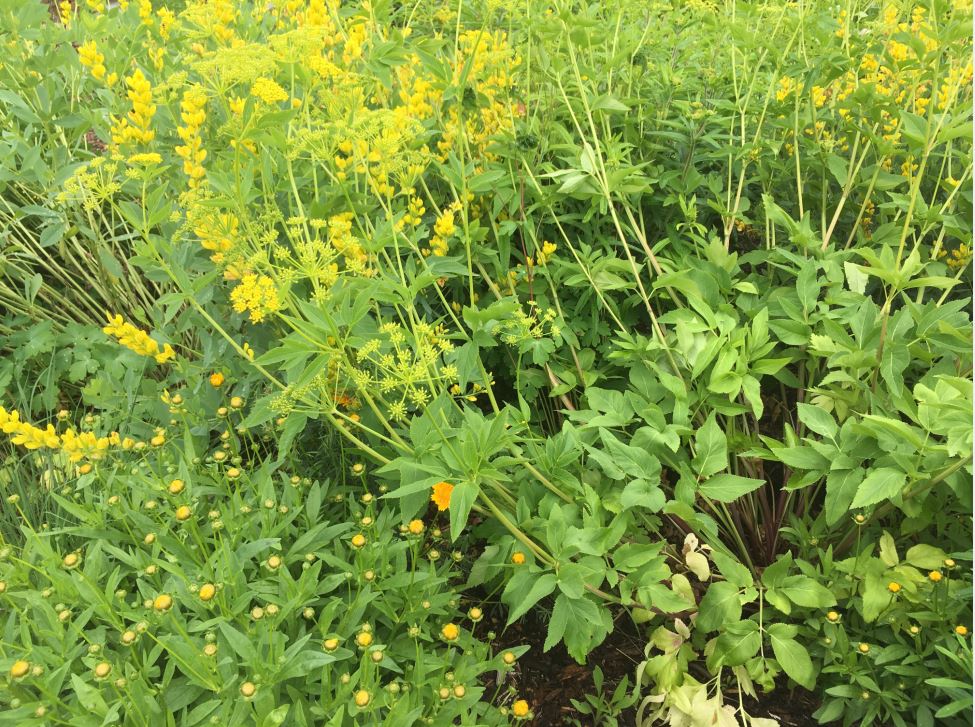
I have a shady moist area on the east side of my front yard, under an old crabapple, that is not colorful until mid-summer with Adenophora. I thought about purchasing some Packera for that spot but I’m afraid it will be more invasive than I would like so I settled on another native instead, Zizia aurea (Golden Alexander) which is a clumper.
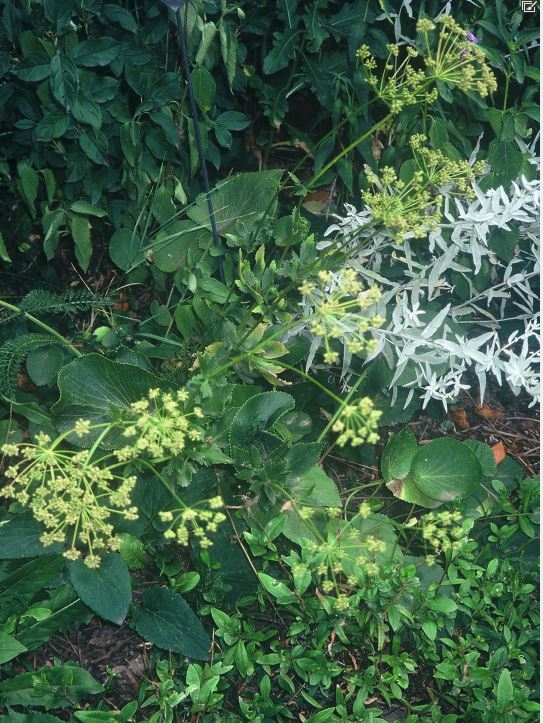
Also, a May and June bloomer, the foliage is quite attractive. Swallowtail caterpillars will feed on its leaves. The yellow umbels on two to three foot stems will need deadheading before the seeds mature in the fall to control spread. However, this perennial is known to be short-lived so you do want some seedlings.
As a landscape designer, one of the most frustrating aspects of designing is knowing that I want a particular form or texture or height for a site and not finding what I want. I love ornamental grasses but ones with any height for shade are few and far between. I still love Chasmanthium latifolium, a lovely native, but it has one huge drawback: it seeds voluminously unless you cut off the oats mid-fall.
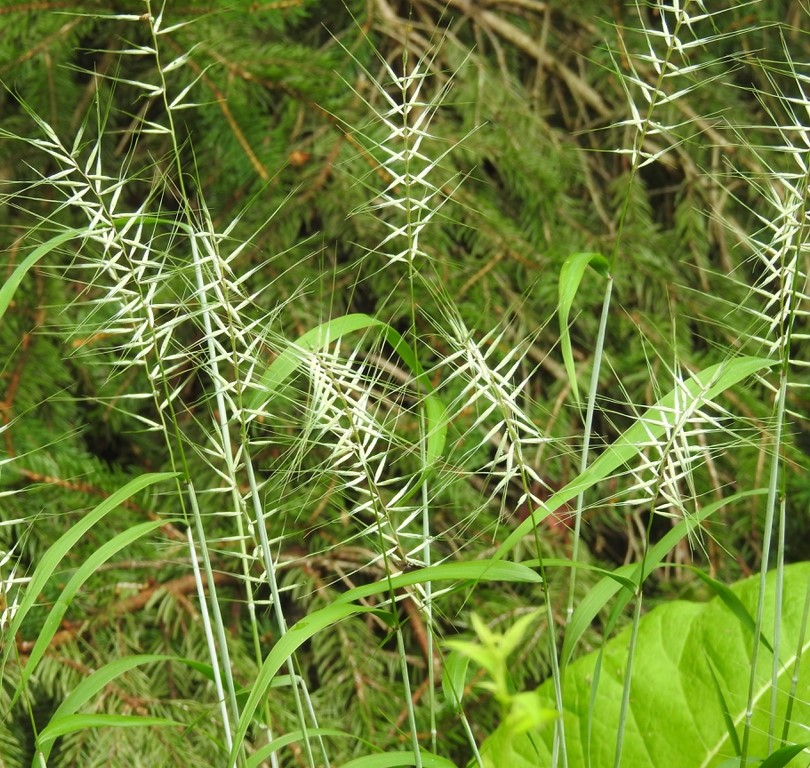
At Meadow City, I discovered Elymus (Leymus) hystrix, the Bottlebrush Grass. It will grow in full to part shade and average to dry soil. The foliage will be three feet tall and, when in bloom, the plant will be four feet tall. A cool season grass that blooms in June, it has striking seedheads that last all summer. I thought about buying it but for the site I had in mind, the height (four feet in bloom) is probably too much; however, it could be just right for you. It is possible that cutting it back before winter is a necessity to keep it in check.
I hope I’ve given you some additional plants to add to your design palette.

0 Comments