

Many clients ask for natives in order to help the environment even though natives may not be the best answer for a particular situation. However, there are many natives available with which many designers and gardeners are not familiar. I am making it my mission to acquaint you with some of these. This time, I will discuss perennials for sun. Next time will be native perennials for shade.
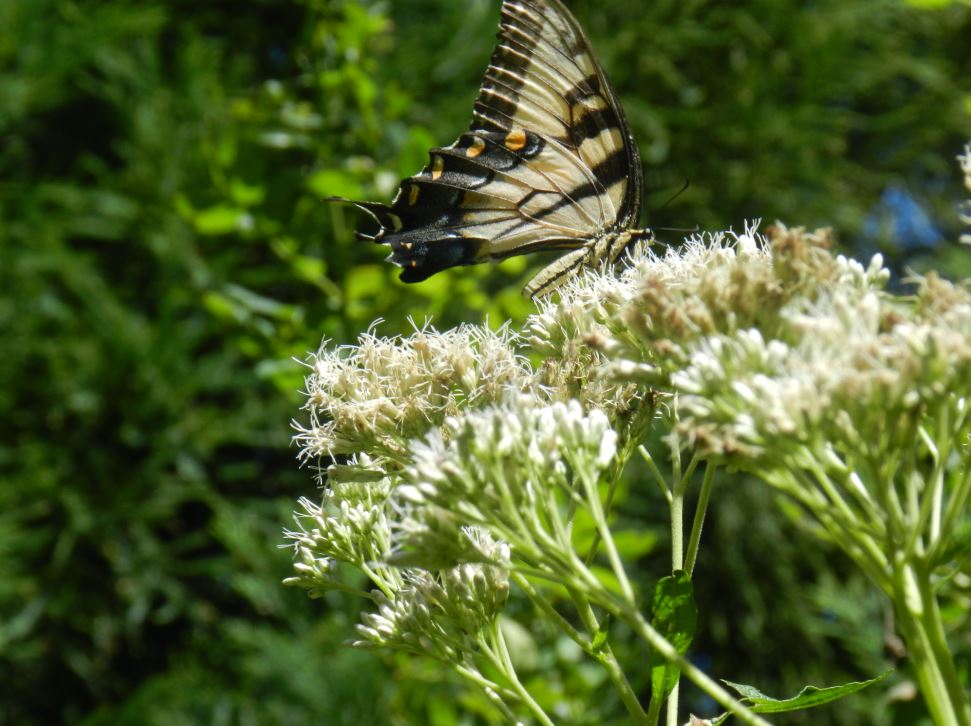
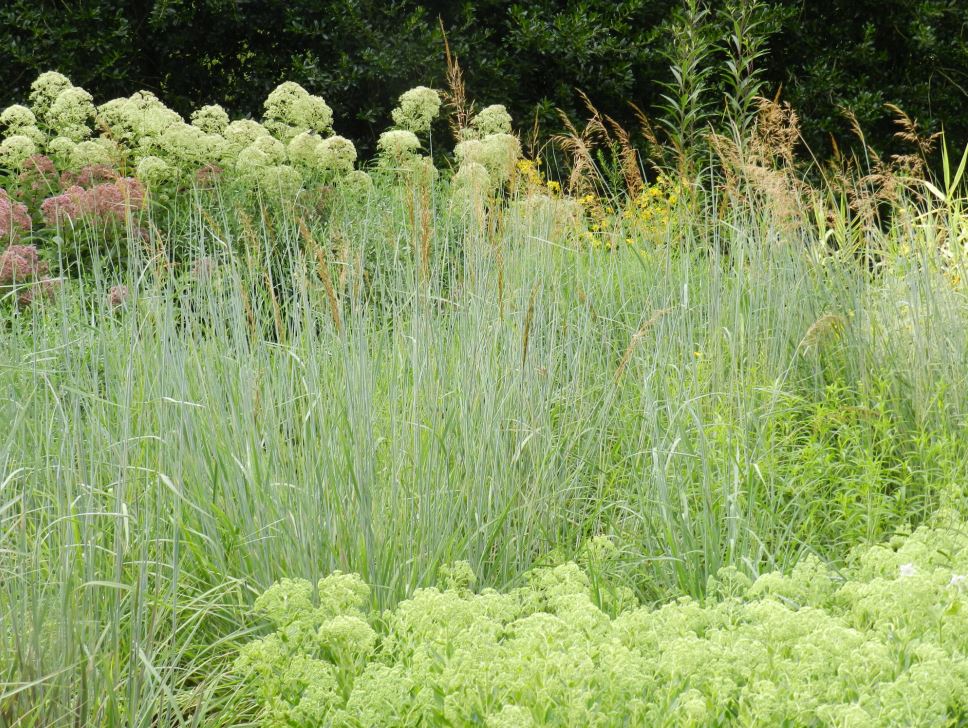
Similar in size and cultural requirements are Eupatorium maculatum/fistulosum ‘Bartered Bride’ and Eupatorium rugosum ‘Chocolate’. Although all three will grow in partial shade, bloom is best in full sun. ‘Chocolate’ has the additional virtues of better shade tolerance, slightly shorter at only five feet, and chocolate-tinged foliage (more so in shade than in sun). Any of these are back of the border plants and work well with ornamental grasses and Echinacea.
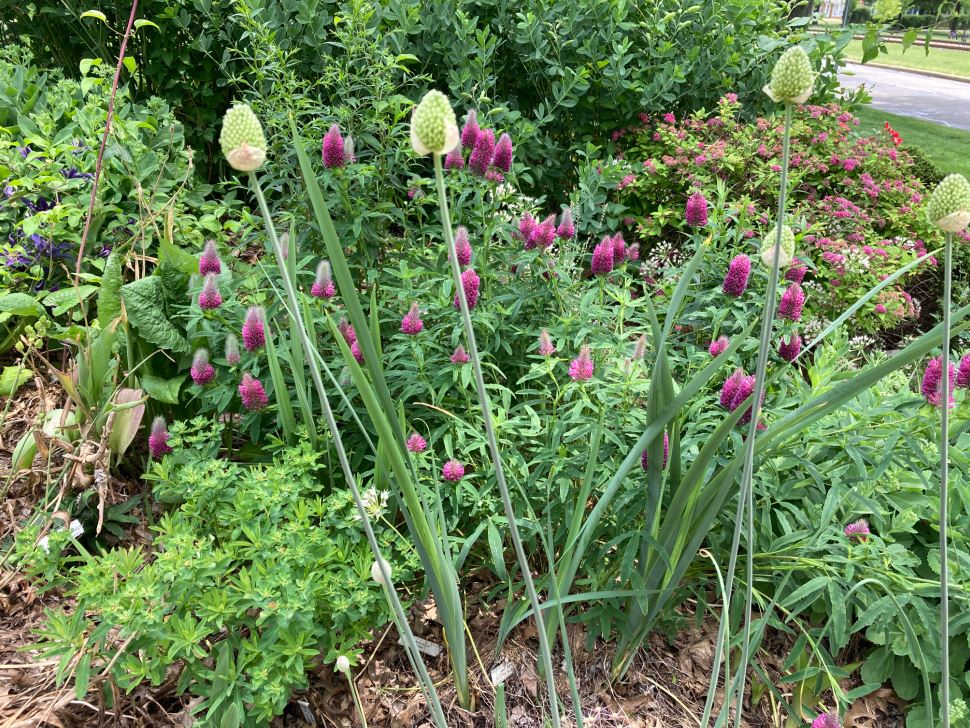
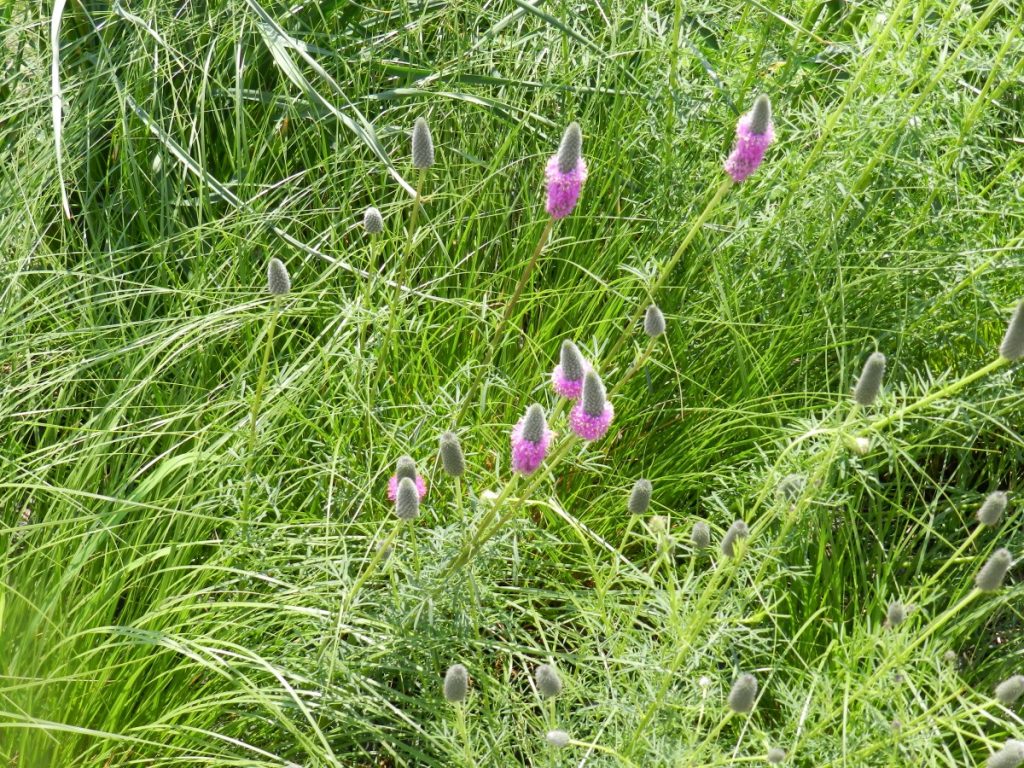
I was not well acquainted with Dalea purpurea (Purple Prairie Clover) until a few years ago when I ordered and planted it in a section of my west bed that is sunny and very dry. The thimble shaped flowers of Purple Prairie Clover sit atop a spray of stems with delicate foliage and stay in bloom well into August. Its deep taproot ensures a long-lived plant. This perennial would work well in many sites such as sunny perennial borders, native plant gardens or naturalized prairie areas.
The flowers offer a popular source of nectar for bumble bees and other pollinating insects. The delicate foliage is host to a few small butterfly species such as the Southern Dogface, California Dogface, and Reakirt’s Blue butterflies, as well as several small moths. One of the most widespread of the Prairie Clovers, Dalea purpurea is a standard component in prairie restorations, but it is uncommon in areas that have been disturbed by modern development. Root division can be tricky as it does not like disturbance after it has become established. Prairie Clovers are legumes and act as a natural soil fertilizer when the spent plant material is left to enrich the soil.
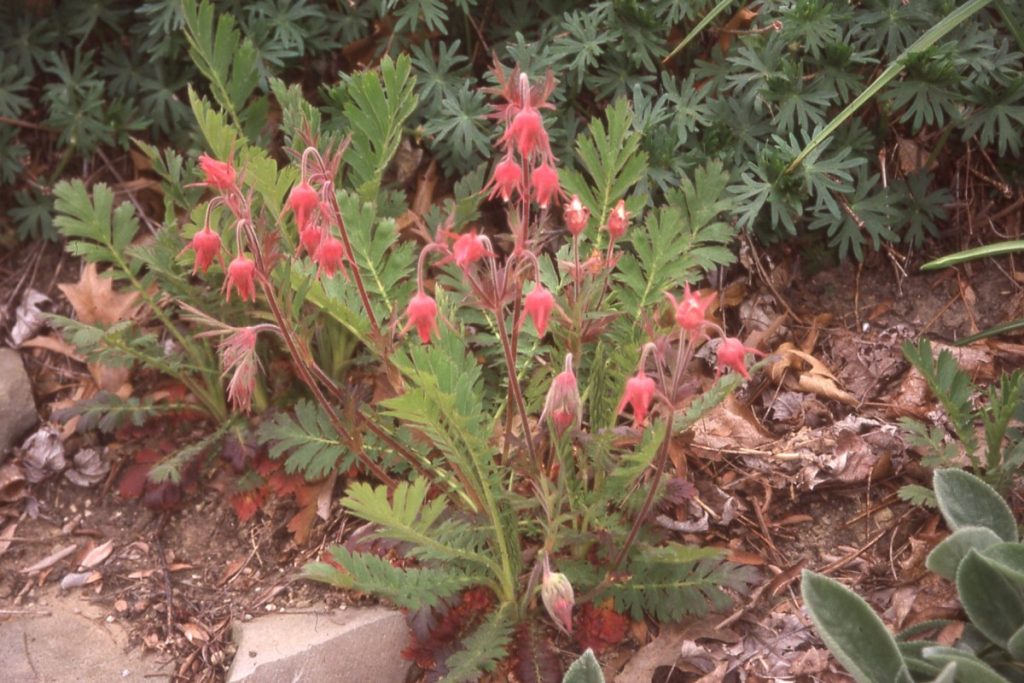
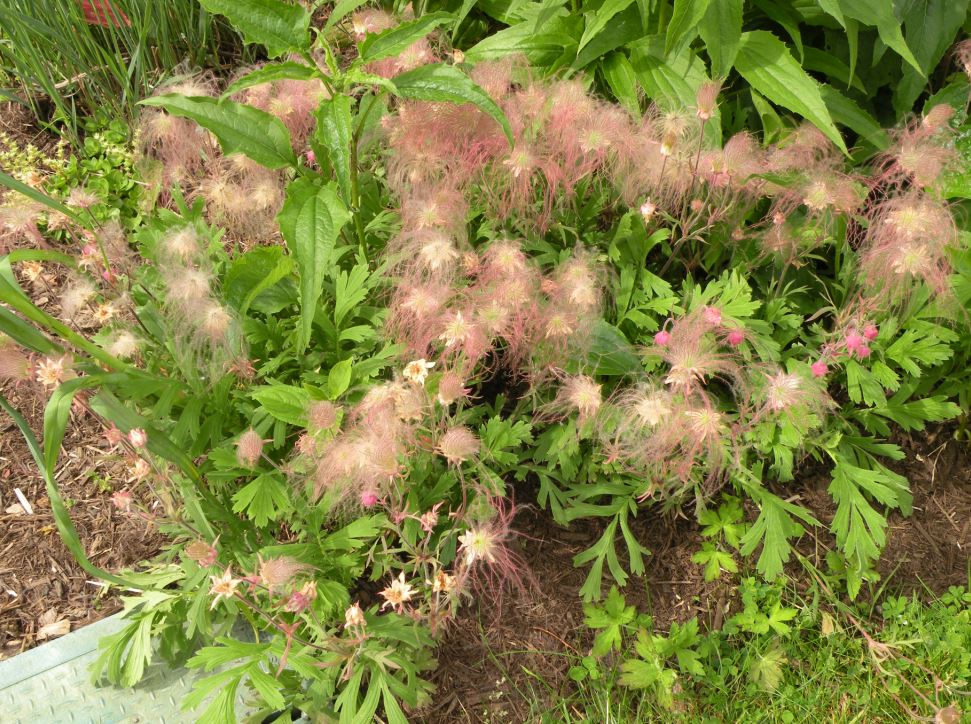
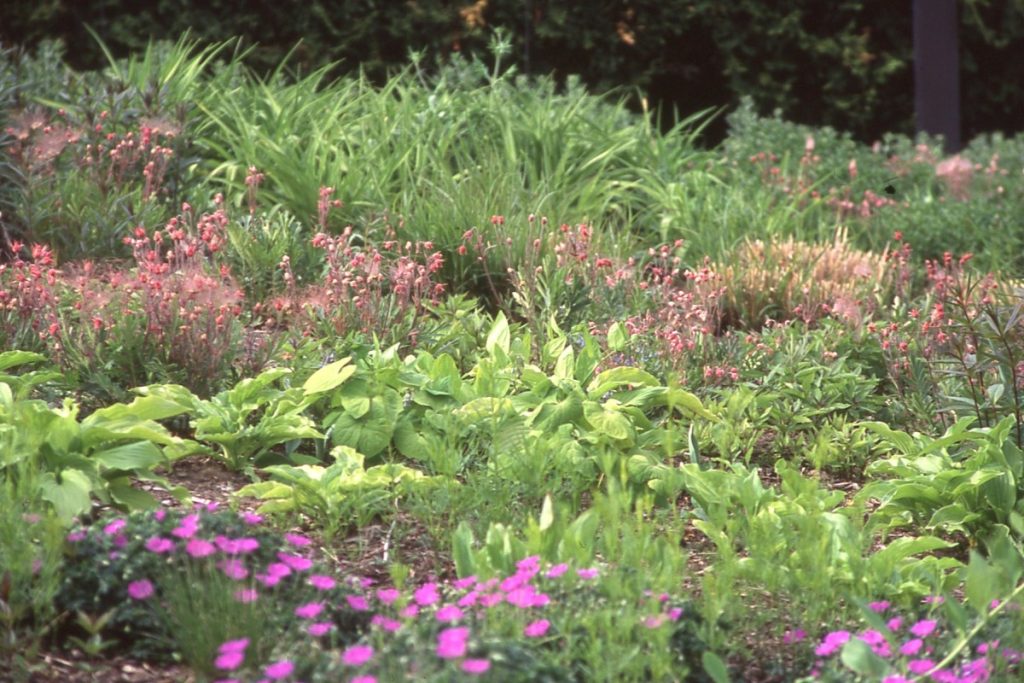
Geum triflorum (Prairie Smoke) is a distinctive prairie wildflower with irresistible pink feathery seed heads. Each flowering stem holds three nodding pink bell-shaped flowers. Once the flowers are fertilized, the real show begins as the nodding blooms transform into upright clusters of wispy pink plumes. A massed planting creates a pinkish haze that can last for a month. The basal leaves are fern-like and deeply serrated with hairy margins. While not truly evergreen, the leaves can persist through winter, turning attractive shades of red and crimson. Plants spread slowly by rhizome to form a groundcover and are perfectly suited for dry rock gardens. Prairie Smoke is also effective planted in groups in a perennial bed, but it does not like to be overcrowded by taller perennials. Excellent for hot dry spots, it thrives in any well-drained soil. Wet and soggy winter conditions may cause the plants to die.
The timing of bloom of this Geum is such that it bridges the period between spring blooming bulbs and early June perennials such as hardy geraniums. The divided foliage is very attractive for the rest of the summer and fall.
All three of these perennials are hardy to at least zone 5 and there is one for each season.

0 Comments