

Perennials
Many gardeners are now very ecologically oriented. They often ask for native plants in their landscapes; they want to encourage beneficial insects, pollinators, and birds; they do not realize that they can feed the birds without buying birdseed.
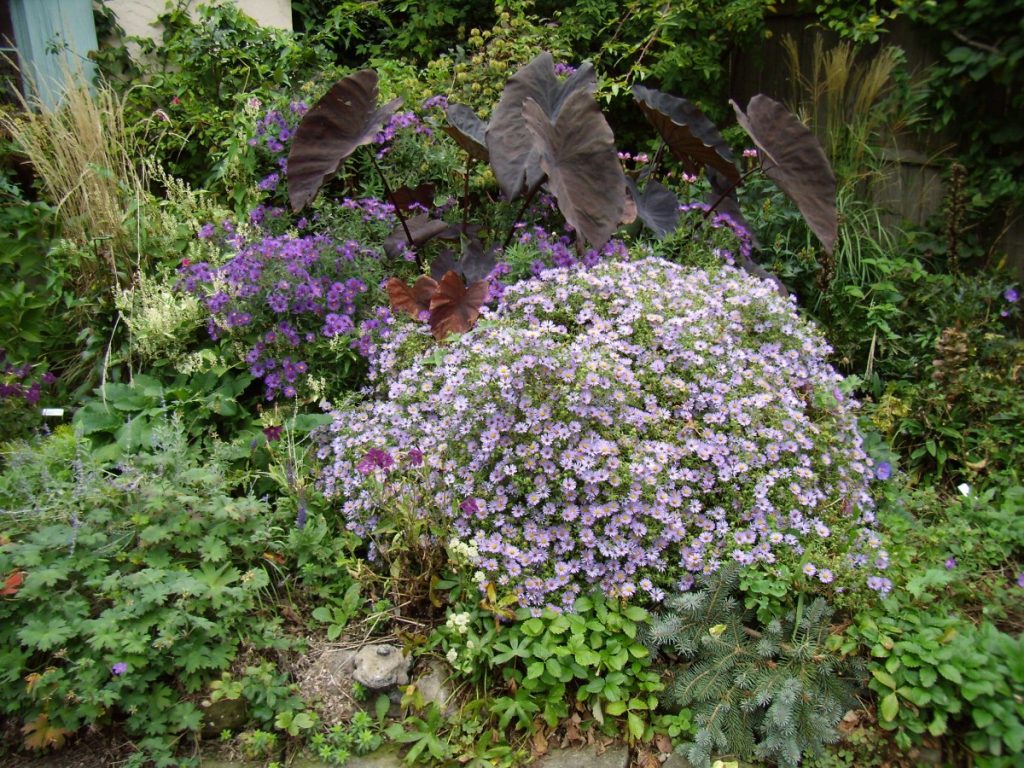
Birds are most in need of food during late summer, fall, and winter. Planting both native and non-native perennials and grasses can supply a lot of that food. Among these, asters are a perennial favorite. Aster (Symphyotrichon) novae-angliae (New England Aster) has a number of cultivars from which to choose, some tall and some short. ‘Hella Lacy’ (purple flowers) and ‘Alma Potschke’ (bright rose flowers) are both tall cultivars (four to five feet tall) while ‘Purple Dome’ and the Woods Series are usually only two feet high. These asters prefer average to moist conditions in full sun.
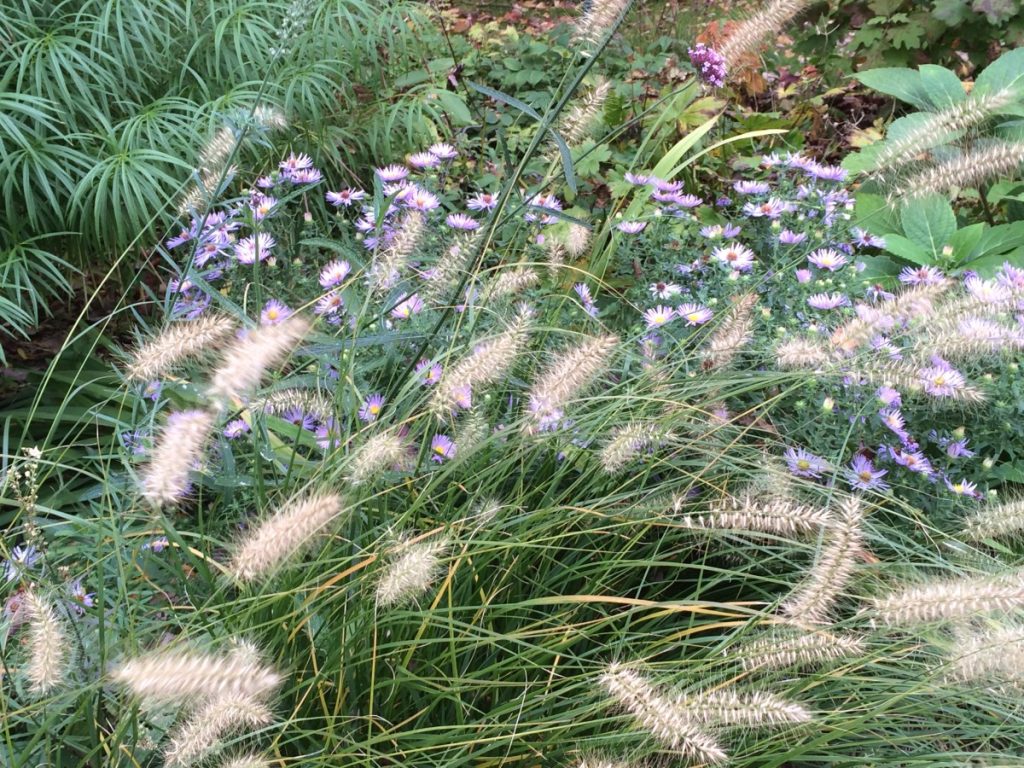
Another native aster is A.oblongifolius ‘Raydon’s Favorite’ will grow two to three feet tall and wide while ‘October Skies’ is a dwarf at fifteen to eighteen inches in height. These lavender-blue asters will grow in average moisture but can also tolerate dry soil in full sun or part shade. The flowers provide a source of late-season nectar for pollinators, followed by seeds fed on by a variety of birds including finches, chickadees, blue jays, juncos, towhees, cardinals, titmice, and nuthatches.
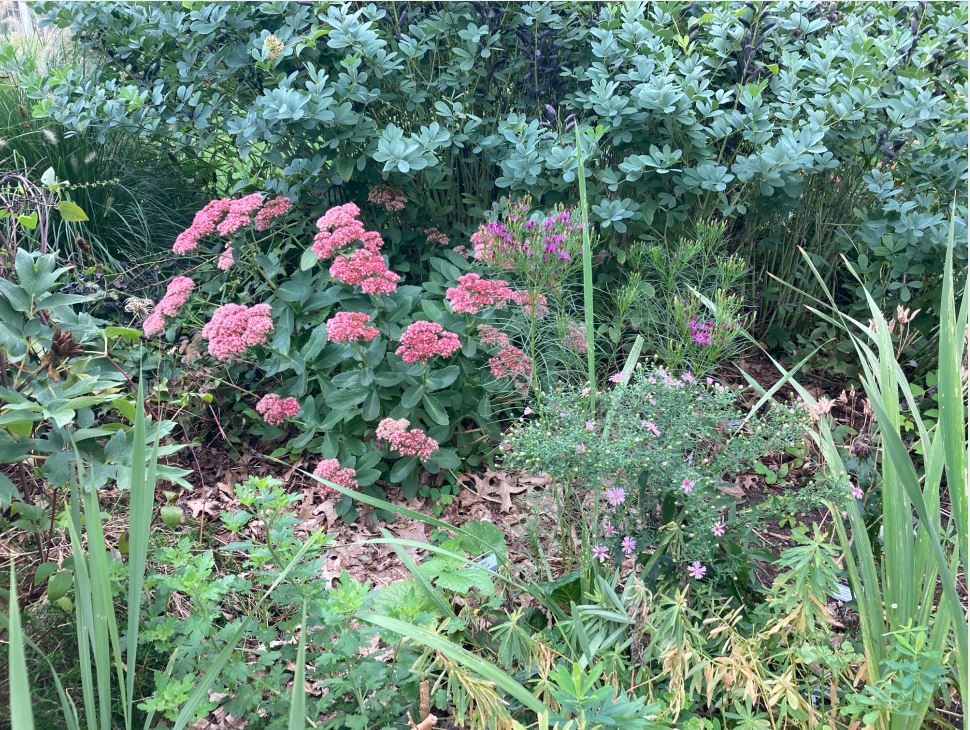
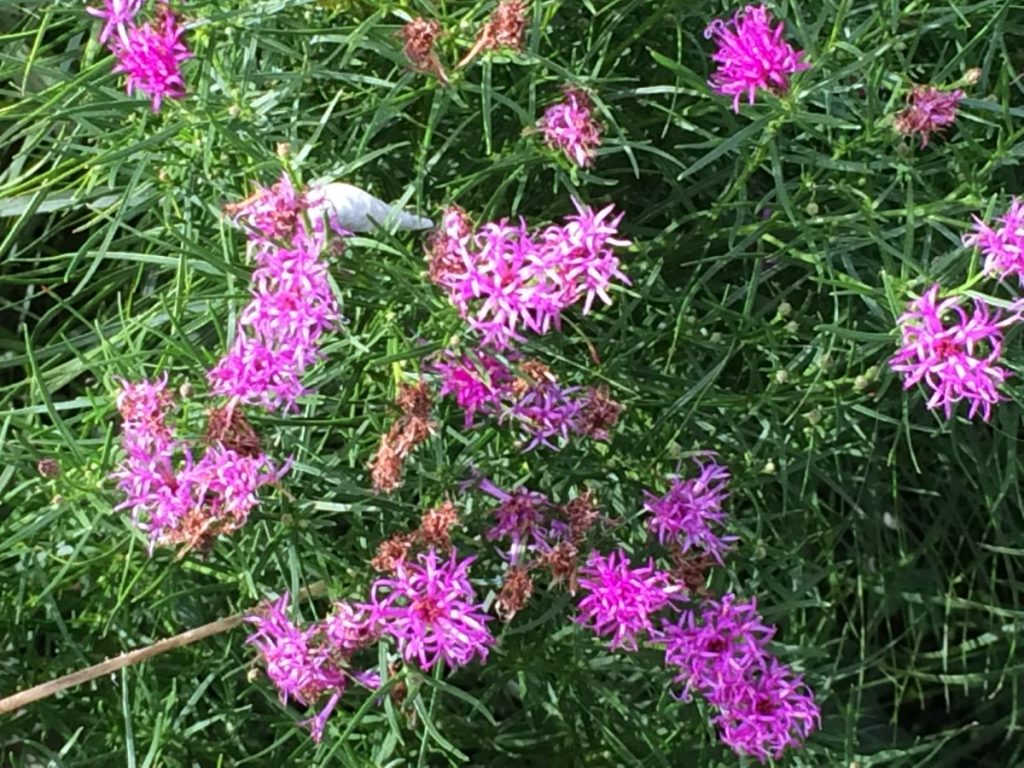
Also consider Vernonia (Ironweed), a late-blooming, sun-loving, native beauty that feeds the birds. The species fasciculata and noveboracensis are quite tall and best suited to a prairie garden but ‘Iron Butterfly’, a cultivar of V.lettermanii, is well suited to the perennial garden, growing only two to three feet high and quite drought tolerant. The petals of this daisy-type flower are much skinnier than those of asters. While asters can be rambunctious, i.e. spreading, Vernonia is a clumper. I have paired Vernonia ‘Iron Butterfly’ with Aster novi-belgii ‘Coombe Fishacre’ in one of my south-facing, relatively dry beds. Although still a young planting, I can tell that it will be spectacular in a year or two. The small rust-colored seeds of Ironweed attract finches and song sparrows.
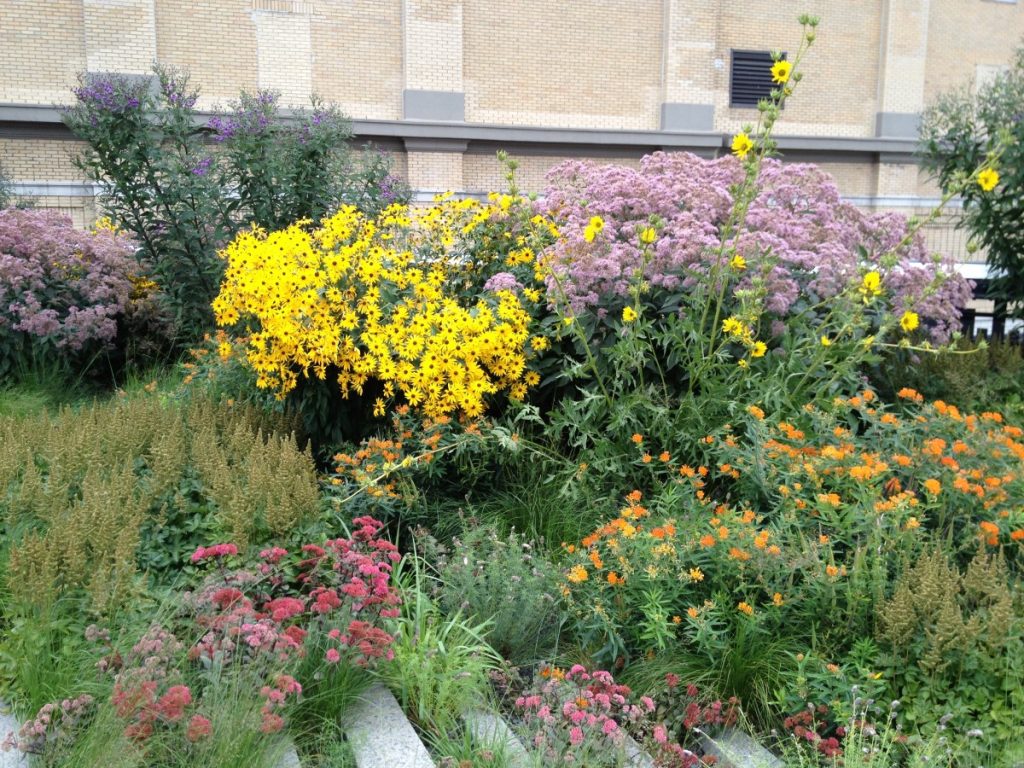
There are several species of Eupatorium/Eutrochium (Joe Pye Weed), all of which are native. Many are quite tall and appropriate for meadows and prairies (they do like moisture) but many of the new cultivars are, thankfully, shorter. Watch for chickadees, wrens, titmice, and goldfinches on the Joe Pye.
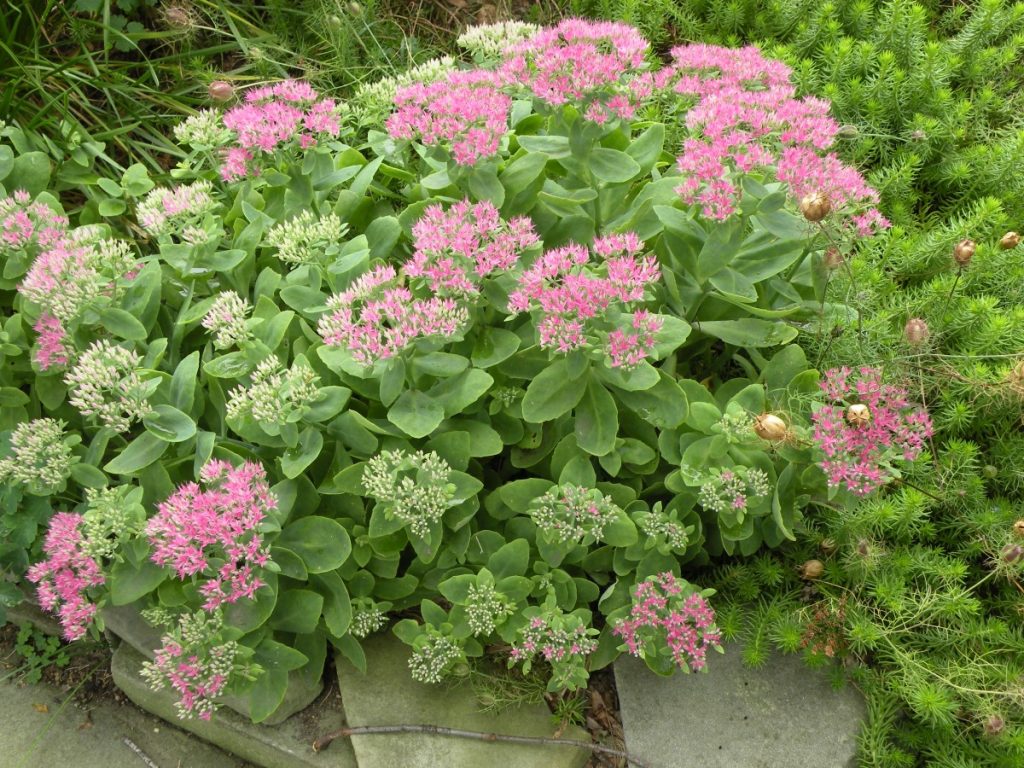
Although not a native, let’s not exclude the beauty and bounty of the numerous cultivars of Sedum (Hylotelephium spectabile), which entice finches, chickadees, and other birds with its small seeds.
Ornamental Grasses
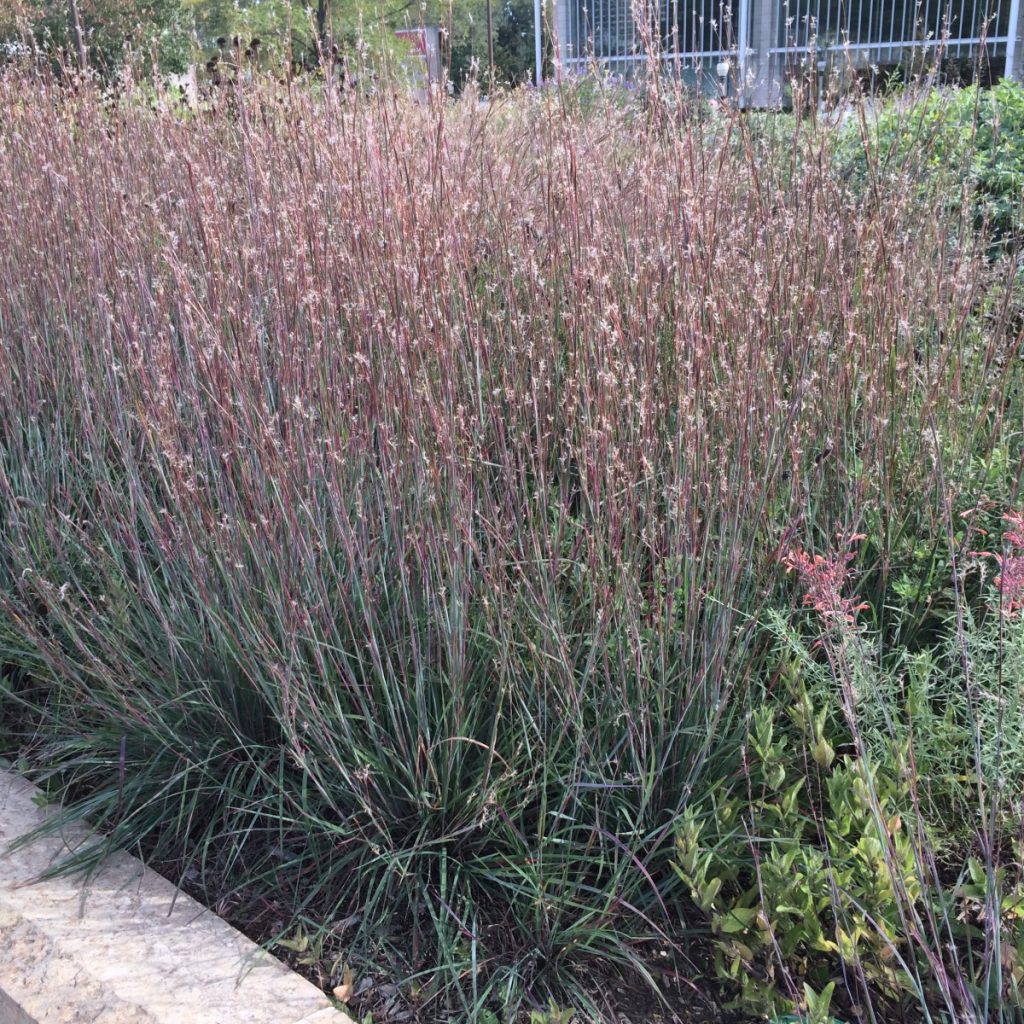
Ornamental grasses are valuable not only as a food source to birds, but also as shelter, particularly for ground nesting birds. Many grasses bloom in late summer, producing a crop of seed in fall. Schizachyrium scoparium (Little Bluestem) is a gorgeous ornamental grass native to prairies. It provides a high-value food source to rosy finches, juncoes, and several native sparrows as well as those that spend the winter in grasslands.
The key to using plants to provide birds with winter food is not cutting plants back in fall. While many gardeners want a tidy garden, allowing plant stems, seedheads, and even dry foliage to stand during the winter months provides valuable food and shelter to wintering birds. Save the tidying for spring cleaning, when seeds have been largely picked over and new food sources are available.

0 Comments