

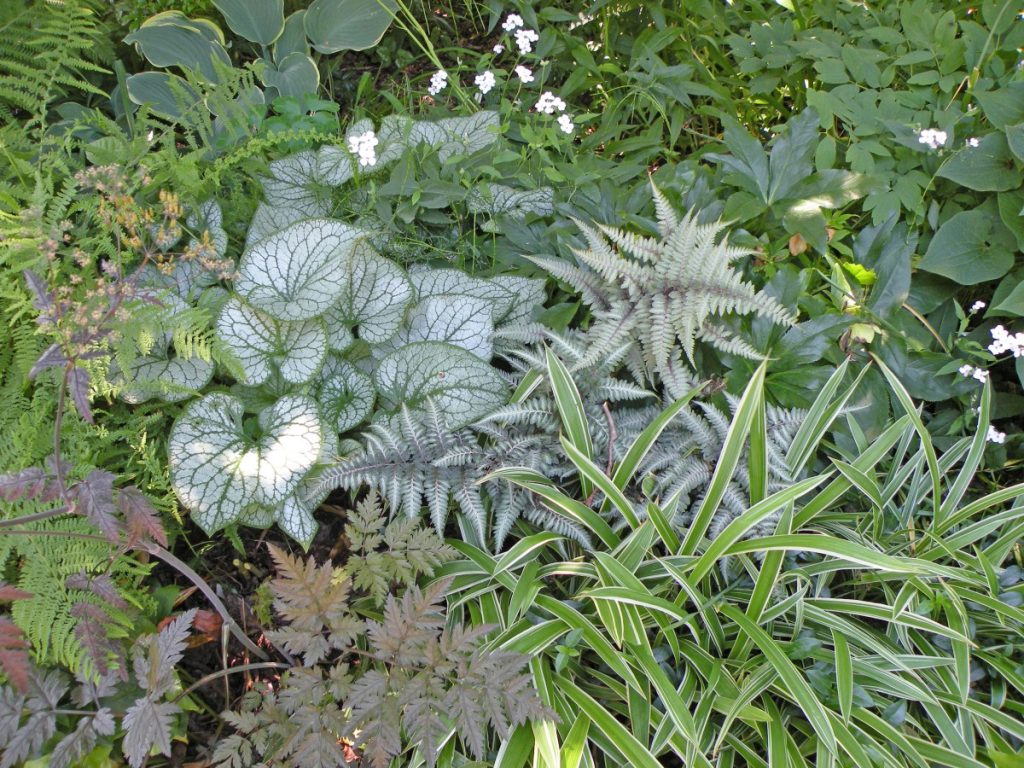
I have yet to meet more than a few new clients who ask for types of gardens that require high maintenance because they are avid gardeners. One of the first requests of most new clients is low maintenance and I’m sure that is true for you too. Therefore, this time, I have several suggestions for high performance/low maintenance perennials that will thrive in part shade. Happily, they all seem to be of no interest to deer.
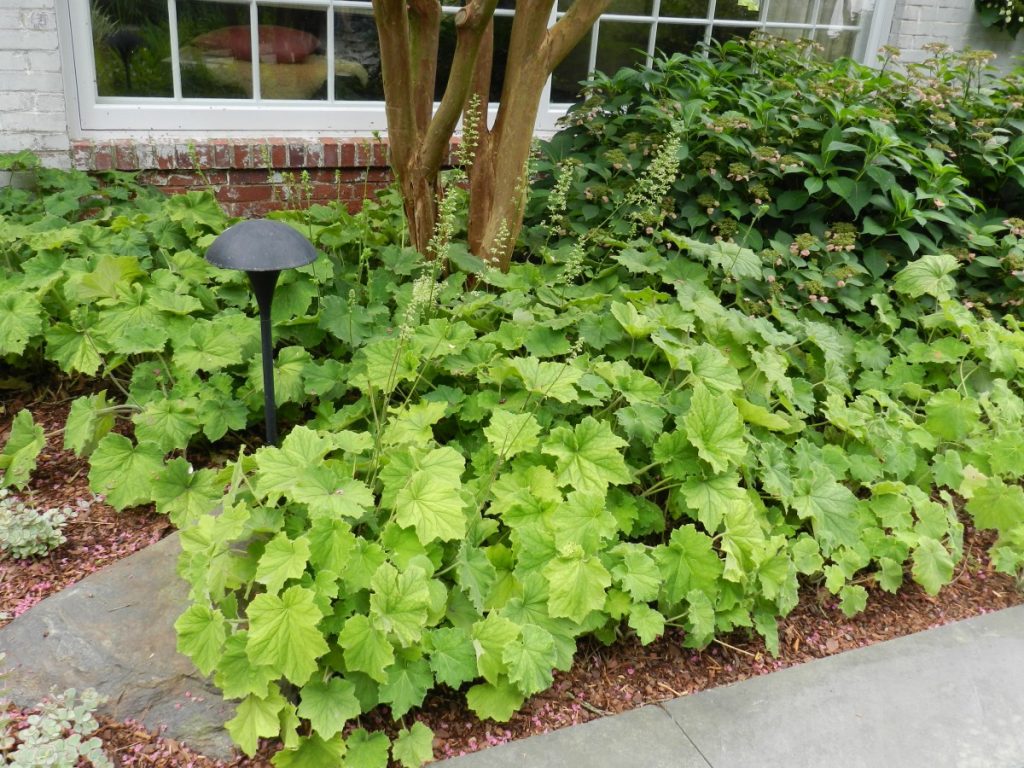
Heuchera (Coral Bells) have been hybridized to a fare-thee-well during the last decade and are now available in a wide range of colors. I find that most do quite well as long as they receive some moisture. The cultivars and hybrids with the most drought tolerance are ones that have H. villosa heritage. They also have larger leaves and don’t bloom until fall. The most widely available cultivars are ‘Autumn Bride’, ‘Bronze Wave’, ‘Caramel’, ‘Citronelle’, and ‘Palace Purple’. ‘Autumn Bride’ has running roots so can become an excellent groundcover. I never bother to cut back the bloom stalks because they usually fall over during the winter and disintegrate. These clumpers generally grow about a foot to a foot and a half high and wide. One of the greatest assets of Heuchera is the fact that the plants retain their color all year.
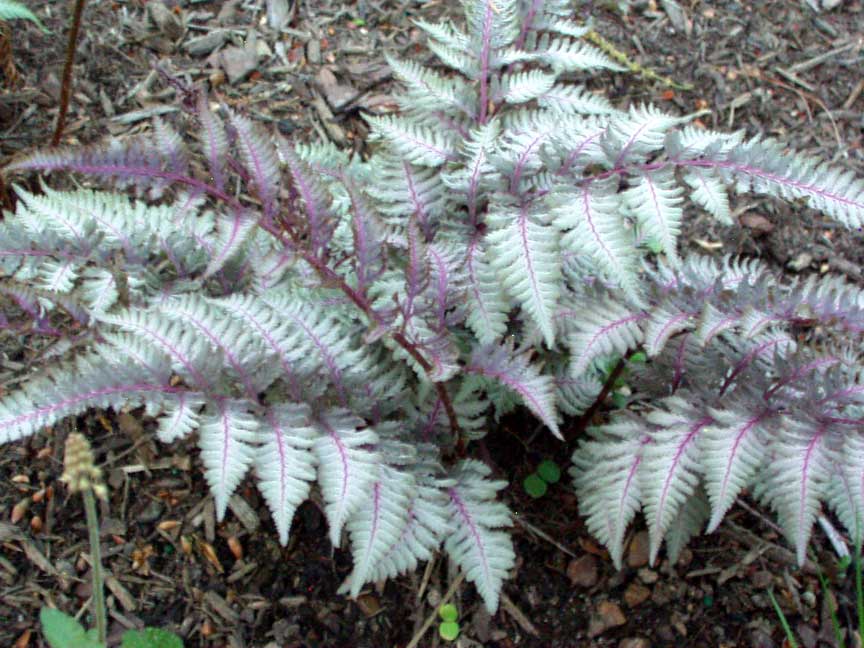
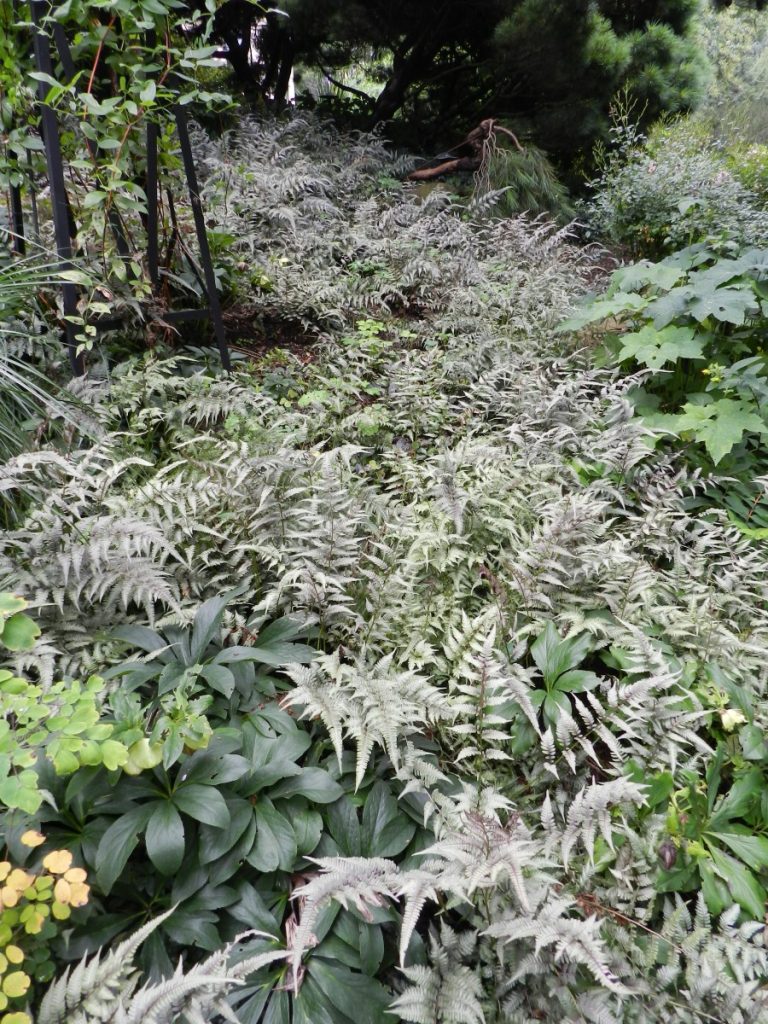
My next candidate is Athyrium niponicum ‘Pictum’ (Japanese Painted Fern). This fern does not flower but its foliage is so lovely that it doesn’t need a flower to brighten the shade. I love the silvery leaflets and purple veins. This fern is a clumper and usually grows eight inches high but a foot wide. Absolutely no maintenance is required for this deciduous fern.
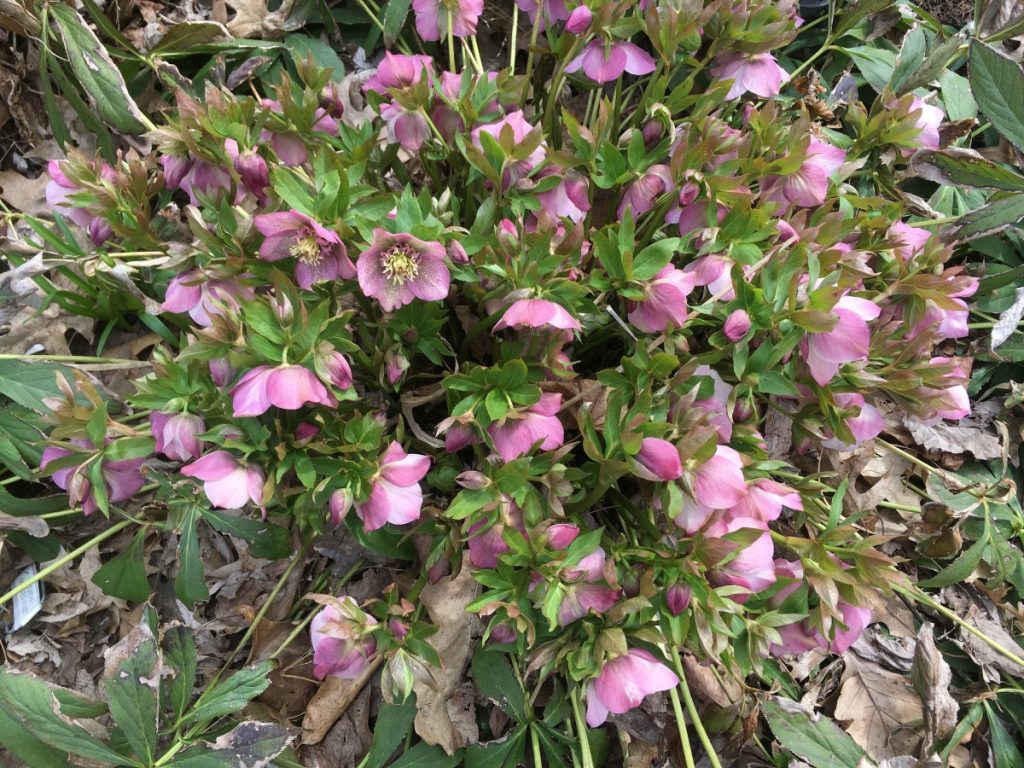
I’ve written extensively about hellebores so this is a perennial with which you should be quite familiar. Its attributes are many. Its foliage is relatively evergreen but can look ratty at winter’s end. When I have time, I cut back the old foliage so the new leaves can provide an excellent background for the beautiful flowers. These flowers bloom when few other perennials are in flower. Depending on site, weather, and cultivar, mine bloom any time from January to April.
The most commonly available and least expensive hellebores are Helleborus orientalis. The blooms are most often shades of pink but some of my seedlings are white. This species usually doesn’t bloom until March but a south facing site and warm winter can have it blooming in February.
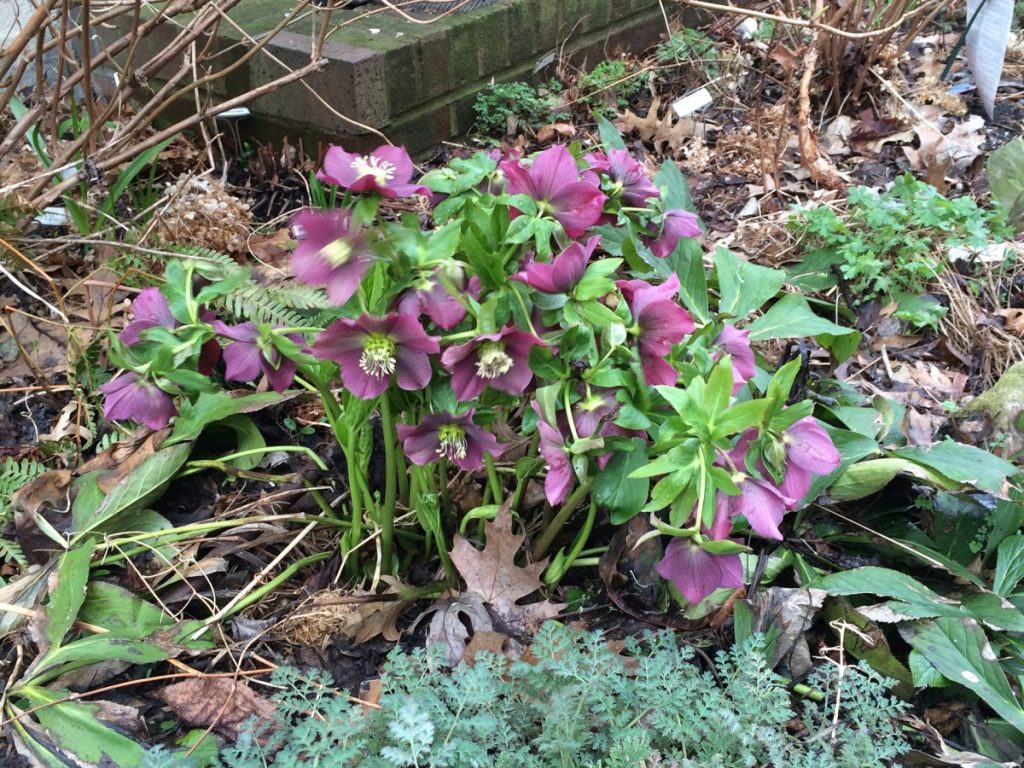
The earliest hellebores to bloom are the HGC (Helleborus Gold Collection) that are a group of premium Christmas Rose (Helleborus niger), Snow Rose (a hybrid) and Lenten Rose (Helleborus orientalis) cultivars. I’ve grown ‘Cinnamon Snow’, ‘Pink Frost’, and ‘Joseph Lemper’, all of which are very early bloomers. An old cultivar that I love is ‘Blue Lady’, a cultivar of Helleborus orientalis, for its blue-purple color.
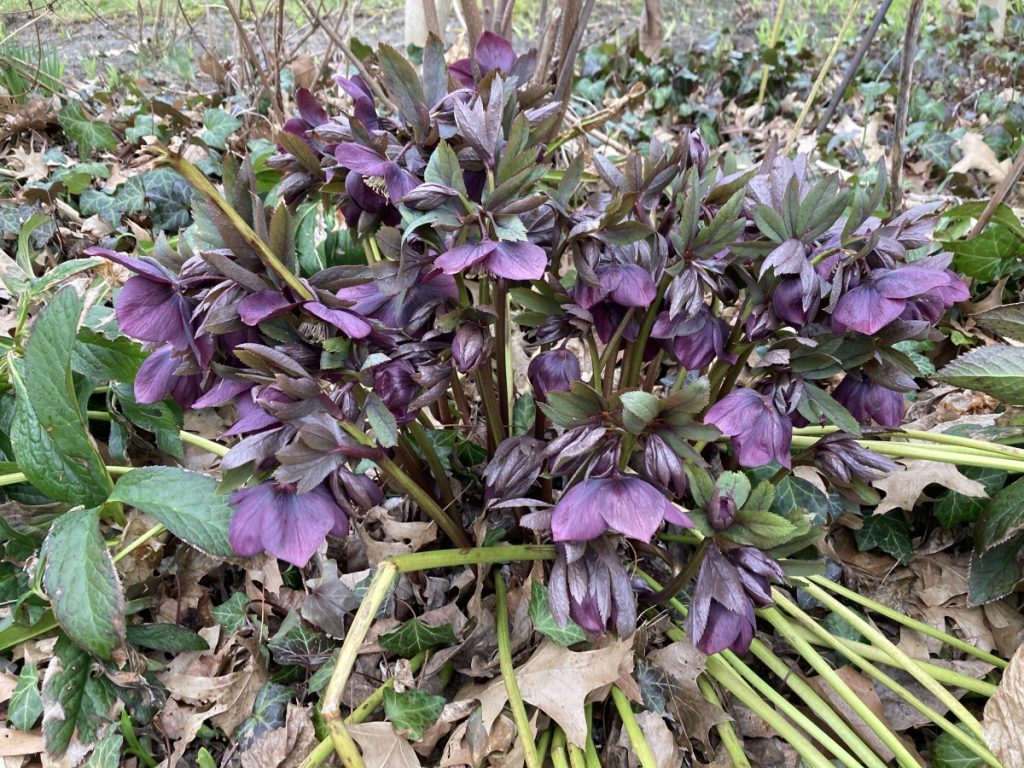
The hybrid ‘Red Racer’ is the largest hellebore I grow. Over the years the clump has enlarged from six inches to two feet high and wide. The name is somewhat misleading. The large flowers are actually deep purple while the new leaves are dark purple although they quickly turn green. This is a late bloomer, usually not until mid-April.
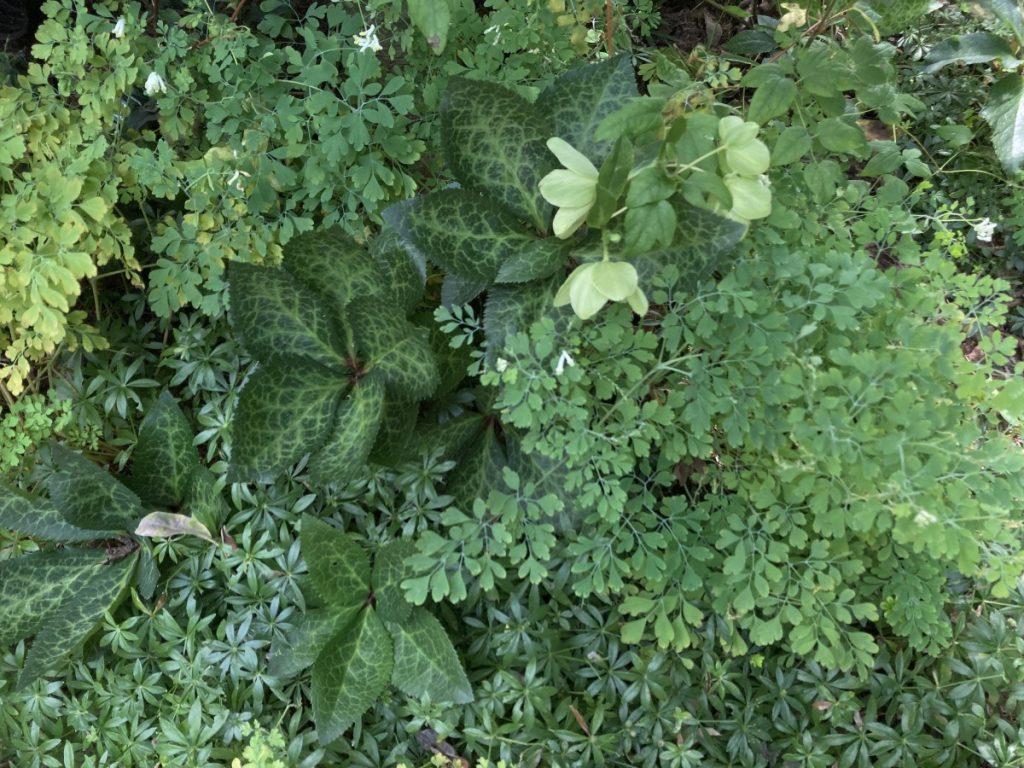
A relatively new series of hellebores are the FrostKiss. They are distinguished by their foliage that is variegated due to the cream or white veining. This means that they add color to the shade garden even when not in bloom.
These suggestions are merely a taste of great perennials that are high performance but low maintenance.

0 Comments